Losing a mature shade tree to a storm or disease can leave your yard feeling exposed and uncomfortably hot during the peak of an Indiana summer. When the July heat sets in, that missing canopy becomes a glaring problem. You might immediately look for the fastest-growing replacement available to quickly restore your outdoor comfort.
Selecting the right replacement requires balancing your immediate need for shade with the long-term health of your landscape. Fast-growing trees often have weaker wood, making them susceptible to the very ice and wind storms that may have damaged your previous tree. Understanding the specific soil conditions of your property is crucial for making a choice that will survive and thrive.
By carefully matching a tree to your yard’s unique environment, you can cultivate a beautiful, cooling canopy. This guide provides expert recommendations on the best fast-growing and long-lasting native trees for the Midwestern climate, giving you the knowledge needed to make a confident planting decision.
Top Fast-Growing Shade Trees for Hoosiers
The best fast-growing shade trees for Indiana include the Tuliptree, Freeman Maple, and Thornless Honeylocust, offering quick relief from the sun while adapting well to local soils. When you want shade quickly, it is important to understand the trade-offs.
Purdue Extension notes that species with rapid growth rates generally have shorter lifespans and weaker branch structures. You can still find excellent options that strike a manageable balance between rapid growth and structural integrity.
Tuliptree (Yellow-poplar)
Indiana’s state tree is a spectacular choice for large landscapes. It grows rapidly and produces beautiful, tulip-shaped flowers in the spring, followed by a striking yellow canopy in the fall. Tuliptrees require deep, rich, and well-drained soils to reach their full potential.
Freeman Maple
If you love the look of a classic maple, the Freeman Maple is an outstanding hybrid. It crosses the fast growth of the Silver Maple with the stronger wood and brilliant autumn color of the Red Maple. It adapts well to various environments, though it performs best in well-drained, slightly acidic soil.
Thornless Honeylocust
This tree is highly adaptable to different soil types and urban environments. Unlike its wild counterpart, the landscape variety lacks dangerous thorns. It features small leaflets that provide a pleasant, dappled shade, allowing your turfgrass to continue growing healthy and strong beneath the canopy.
Sweetgum
The Sweetgum is a rapid grower known for its star-shaped leaves and brilliant, multi-colored fall foliage. It is highly attractive, but it does drop spiny seed capsules in the fall. If you plant a Sweetgum, place it away from sidewalks or areas where you might walk barefoot.
Choosing the Best Native Species for Longevity
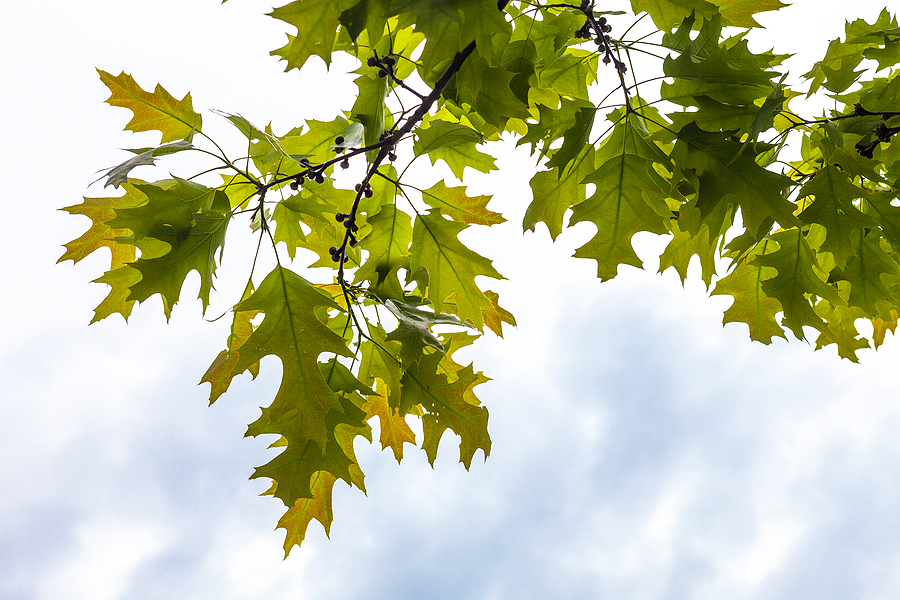
For a tree that lasts generations, choose robust Indiana natives like the White Oak, Bur Oak, and Black Walnut. The Indiana Department of Natural Resources strongly advocates for planting native species.
Natives are naturally adapted to the state’s fluctuating weather patterns and typical soil pH levels, which generally range from mildly acidic to neutral. They also provide essential habitats and food sources for local wildlife.
White Oak
The White Oak is a majestic, long-lived shade tree that can eventually reach up to 100 feet tall. It thrives in well-drained soils and develops a wide, spreading canopy that provides massive amounts of shade. While its initial growth rate is slower, the resulting strength and beauty make it a cornerstone of any landscape.
Bur Oak
If your property has challenging soil, the Bur Oak is incredibly resilient. It tolerates both wet, poorly drained areas and dry, exposed sites. This tree produces distinct, fringed acorns and features thick, corky bark that protects it from environmental stress.
Black Walnut
Valued highly for its timber and nuts, the Black Walnut is a fantastic native option if you have deep, fertile soil. It is very site-sensitive and will struggle in dry, poor earth. Keep in mind that Black Walnuts release a natural compound called juglone, which can inhibit the growth of certain nearby garden plants, so location planning is essential.
Shagbark Hickory
Named for its peeling, smoky-gray bark, the Shagbark Hickory is a highly attractive native tree. It thrives in a variety of moist soils and provides an excellent habitat for local wildlife, including shelter for native bats.
How to Care for Your New Shade Trees
Proper care involves planting near Arbor Day, prioritizing weed control for the first three years, and avoiding concentrated fertilizers in the planting hole. Securing a healthy tree from a reputable nursery is only the first step. How you plant and maintain that seedling dictates its entire future. Start your planning early and prepare the planting site meticulously.
Timing your planting
The ideal time to plant a new shade tree in Indiana is early spring. Aim to have your sapling in the ground around Arbor Day, which lands on the last Friday in April. This gives the root system time to establish before the stressful heat of summer arrives.
Preparing the hole
Dig a hole that fully accommodates the root system without bending or crowding the roots. Never plant the tree too deeply. The root collar—the flared area where the trunk meets the roots—should sit level with or slightly above the surrounding soil surface. Planting too deep can suffocate the tree and lead to stem rot.
Watering and mulching
Keep the roots cool and moist. Apply a two- to three-inch layer of organic mulch around the base of the tree to retain soil moisture and regulate temperature. Keep the mulch pulled a few inches away from the trunk itself to prevent decay. Water deeply during dry spells, especially throughout the tree’s first few growing seasons.
Controlling weeds and avoiding fertilizer
Weed control is the most critical maintenance activity for a young tree. Grass and weeds fiercely compete for water and nutrients. Maintain a weed-free zone around the base for at least the first three years. Additionally, Purdue Extension experts warn against placing concentrated, salt-based fertilizers directly into the planting hole, as this can severely burn and kill the delicate new roots.
FAQ Section
What is the best soil for planting shade trees in Indiana?
Most native Indiana trees thrive in moist, well-drained loam with a mildly acidic to neutral pH (4.5 to 7.0). Because many residential areas have heavy, compacted clay, it is vital to select adaptable species like the Bur Oak or Freeman Maple, or to aerate and amend the soil prior to planting.
Why are the leaves on my new tree turning yellow?
Yellowing leaves, a condition known as chlorosis, often occur when a tree cannot absorb enough iron from the soil. This is incredibly common with species like the Pin Oak when planted in alkaline (high pH) soils. Testing your soil pH before choosing a tree can prevent this issue entirely.
How much space does my shade tree need?
A common landscaping mistake is planting a sapling too close to a house, driveway, or power line. Always research the mature spread of the specific species you are purchasing. Large shade trees generally need to be planted at least 20 to 30 feet away from any permanent structures to prevent root damage and dangerous limb overhangs.
Enjoy a Cooler Summer Under the Perfect Canopy
Transforming a hot, barren yard into a shaded retreat requires patience and careful selection. By prioritizing native species and robust hybrids tailored to your specific soil conditions, you protect your landscape from future storm damage and disease.
Providing rigorous care during those crucial first few years ensures your sapling will mature into a permanent, cooling fixture for your home. Take the time to assess your soil, choose your species wisely, and look forward to relaxing under your own leafy canopy.
If you have large trees that need attention, we are here to help. We offer professional routine tree care in Indianapolis and surrounding counties. From tree trimming and pruning to complete stump removal, we provide expert, safe services at competitive prices. Contact us today to keep your property looking its best.
Related Post: Midwest Tree Planting: A Hardiness Zone Guide