There is something undeniably majestic about a mature tree standing guard over a home. It provides shade in the summer, structural beauty in the winter, and a sense of permanence that new landscaping simply cannot replicate. However, trees are living organisms with a finite lifespan. Whether due to disease, storm damage, or simply encroaching on a foundation, there comes a time when even the most beautiful tree must come down.
When that time comes, the sheer size of the task can be deceptive. Standing on the ground looking up, it’s easy to underestimate the weight of heavy limbs or the complexity of bringing them down safely. The temptation to handle the removal yourself—perhaps to save money or tackle a weekend project—is understandable. You might have a chainsaw and a ladder, and on paper, the physics seem straightforward.
But tree removal, especially for large specimens, is rarely straightforward. It is a high-stakes operation that sits at the intersection of biology and physics. A tree that looks solid may be hollow inside; a limb that looks light can weigh hundreds of pounds. This guide explores why the removal of large trees is a task best left to professionals and the serious risks involved in attempting it as a DIY project.
Why Professional Tree Removal is Crucial
When you hire a professional tree service, you aren’t just paying for muscle and machinery; you are paying for expertise. Specifically, you should look for companies that employ certified arborists. These individuals have studied the science of planting, caring for, and maintaining trees.
Understanding the biology of the tree is critical during removal. For instance, a certified arborist can assess the structural integrity of the trunk before anyone climbs it. They can identify signs of internal decay that might make the tree unstable and unsafe to scale. A novice looking at the bark might see a sturdy tree, while an expert sees a potential collapse waiting to happen.
Furthermore, professionals understand the physics of falling wood. They know how different wood species react to being cut—some wood is brittle and snaps suddenly, while other types are fibrous and hold on until the last second. Knowing how a specific tree will react to a chainsaw cut ensures that limbs fall exactly where they are intended to, rather than swinging back toward the climber or crashing onto a roof.
The Risks of Removing a Tree Yourself
The statistics regarding amateur tree work are sobering. The Centers for Disease Control and Prevention (CDC) consistently lists logging and tree work among the most dangerous professions in the country. When untrained homeowners attempt these tasks without the proper safety protocols, the risks skyrocket.
The Danger of Gravity and Height
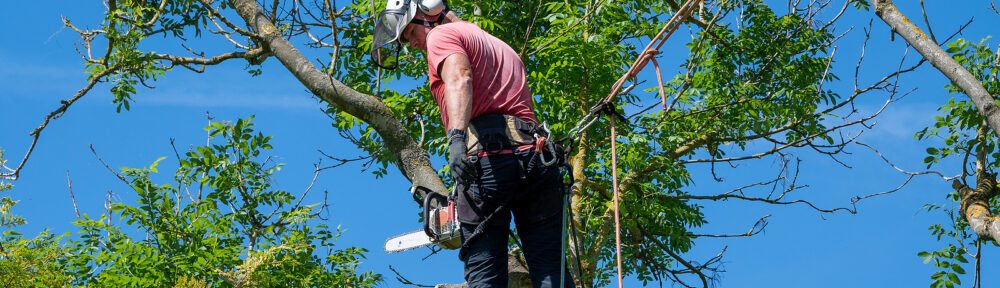
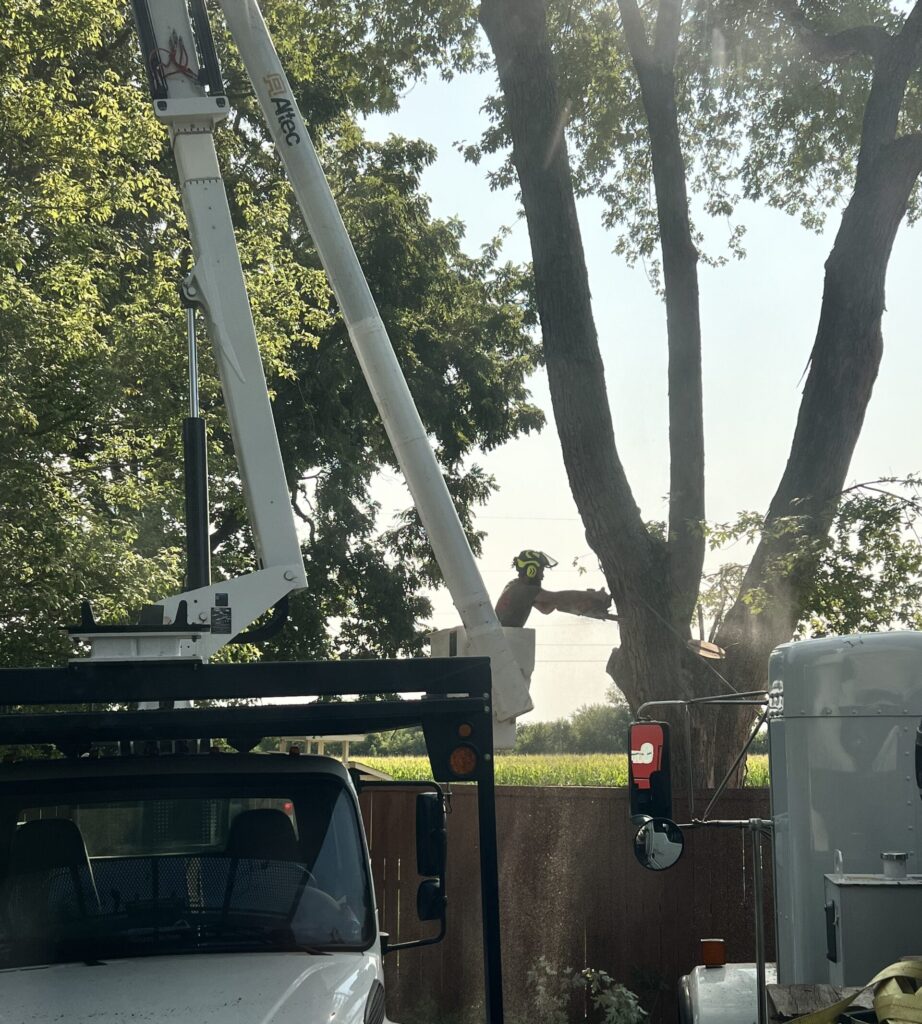
The most obvious risk is working at heights. Removing a large tree often requires ascending high into the canopy to remove limbs piece by piece. Homeowners often rely on ladders for this, which is a significant safety error. A ladder creates an unstable platform, especially when you are applying force to a chainsaw or when a falling branch shakes the tree trunk. Professionals use ropes, harnesses, and bucket trucks to secure themselves, ensuring that if they slip, they don’t fall.
Unpredictable Falling Zones
Directional felling—making a tree fall in a specific spot—is an art form. It requires precise cutting techniques, including the scarf cut and the back cut. If these cuts are off by even a fraction of an inch, or if the tree has a hidden lean or uneven weight distribution, the tree can fall sideways or backward. In a suburban environment, a miscalculation doesn’t just mean the tree lands on the lawn; it could land on your home, your car, or your neighbor’s property.
Chainsaw Kickback
Chainsaws are powerful, efficient tools, but they are also unforgiving. One of the most common causes of injury is “kickback,” which occurs when the moving chain at the tip of the guide bar touches an object, or when the wood closes in and pinches the saw chain in the cut. This can instantly throw the saw back toward the operator with immense force.
Professional tree fellers wear specialized protective chaps, helmets, and face shields to mitigate this risk, gear that most homeowners do not own.
Request a Free Quote for Large Tree Removal ✨
Benefits of Professional Tree Removal
Beyond simply avoiding injury, there are practical and financial benefits to hiring a professional service. The efficiency and thoroughness of a professional crew can save you days of backbreaking labor and leave your property looking pristine.
Advanced Equipment and Rigging
Large trees cannot simply be felled in one piece in a residential area. They must be dismantled. This process, known as rigging, involves securing ropes and pulleys to lower large sections of wood to the ground slowly and in control. This prevents heavy logs from creating craters in your lawn or smashing pavement. Professional tree services also utilize cranes for trees that are too dangerous to climb or are located in tight spaces where debris cannot be dropped.
Proper Waste Disposal
One aspect of tree removal that homeowners often overlook is the volume of debris. A single large oak tree can produce tons of wood and brush. Processing this material requires industrial wood chippers and heavy-duty trucks. If you cut down a tree yourself, you are left with a massive pile of debris that can be difficult and expensive to dispose of. Professional services handle the cleanup, hauling away the wood and raking the area clean, so you aren’t left with a mess.
Insurance and Liability Protection
Reputable tree care companies carry liability insurance and workers’ compensation insurance. This is a crucial safeguard for you as a homeowner. If a professional damages your roof during the job, their insurance covers the repairs. If a worker is injured on your property, their workers’ comp covers their medical bills. If you or a friend get hurt while doing it yourself, you could be facing significant medical costs and potential legal liability.
Factors That Affect Tree Removal Cost
Cost is often the primary driver for DIY attempts, but understanding what goes into a professional quote can help you see the value. Tree removal pricing is rarely a flat rate; it varies based on the specific challenges of the job.
Size and Location
Naturally, larger trees require more time, labor, and equipment to remove. However, location is equally important. A massive tree in the middle of an empty field is cheaper to remove than a medium-sized tree wedged between a house and a power line. Accessibility matters—if the crew can drive a bucket truck right up to the tree, it will be faster and less expensive than if they have to climb and carry all debris out by hand through a narrow gate.
Tree Condition and Complexity
A dead or rotting tree can actually be more expensive to remove than a healthy one because it is more dangerous. If a tree is unsafe to climb, the crew may need to bring in a crane, which increases the operational cost. Additionally, trees with multiple trunks or complex branching structures take longer to dismantle.
Stump Removal
Standard tree removal usually includes cutting the tree down to a stump close to ground level. Stump grinding—using a machine to chew the stump down below the soil grade—is typically an add-on service. While it adds to the cost, it allows you to replant grass or landscaping over the area, removing the final trace of the tree.
Conclusion
The decision to remove a large tree is significant, but the method you choose to do it is even more critical. While the DIY route may seem like a way to save money, the potential costs in terms of safety, property damage, and liability far outweigh the savings. Professional arborists bring the training, equipment, and insurance necessary to handle these giants safely and efficiently. By hiring a pro, you protect your home, your family, and yourself from the unpredictable nature of tree work.
If you are dealing with a hazardous or unwanted tree, don’t wait for a storm to make the decision for you.
Need help with a difficult tree? Contact Us Today to schedule your free estimate for large tree removal service in Indianapolis and let our experts handle the heavy lifting.
Related Post: When to Remove a Tree: Essential Signs Every Property Owner Should Know