A healthy urban forest brings shade, beauty, and life to your property. But keeping your trees vibrant means protecting them from tiny, sometimes unseen threats. Insects and invasive species can quickly turn a thriving canopy into a brittle, dangerous hazard.
Tree pests aren’t just a cosmetic issue; they cause conditions that can lead to long-term structural damage or even the death of your favorite landscape features. Recognizing the early warning signs of an infestation can mean the difference between saving a beloved tree and having to pay for a costly removal.
Understanding how to identify and treat these invaders is vital for maintaining your property. This guide outlines the most destructive tree pests currently active in Indiana, offering practical, expert-backed strategies to help you protect your landscape and keep your trees thriving all year round.
How to Identify the Emerald Ash Borer
The Emerald Ash Borer (EAB) is a destructive, metallic green beetle that targets ash trees, causing rapid decline and death within two to five years if left untreated.
Signs of Emerald Ash Borer Infestation
Recognizing an EAB infestation early is critical for saving the tree. The most obvious indicator is a noticeable reduction in canopy coverage, as the top branches begin to die first. You may also spot D-shaped exit holes in the bark, which indicate that adult beetles have emerged. As the damage progresses, large chunks of bark may detach, and the tree will become dangerously brittle. Trees with severe structural weakness often collapse during heavy weather events.
Treatment Options
Treating an infested ash tree is possible, provided the canopy loss is less than 30%. The most effective combination involves injecting the insecticide emamectin benzoate directly into the trunk. Purdue University research indicates that treating trees once every three years provides durable, sufficient protection. At an estimated cost of $300 per treatment, this method is highly cost-effective compared to the $1,800 to $3,600 price tag of removing a dead tree. Spring treatments generally yield the best results.
Dealing with the Spotted Lanternfly in Indiana
The Spotted Lanternfly is an invasive planthopper that feeds on the sap of over 100 plant species, severely weakening trees and leaving behind a sticky residue that promotes fungal growth.
Identifying Egg Masses
First detected in Indiana in 2021, this pest overwinters as egg masses. These masses contain 30 to 50 brownish-yellow, seed-like eggs covered in a whitish-gray waxy layer. As the weather cools, this protective coating turns grayish-brown and closely resembles cracked mud. You can find these patches on smooth tree bark, firewood, rocks, outdoor furniture, or even vehicles parked near infested areas.
Removal Techniques
Managing the Spotted Lanternfly requires a multi-step approach. During the late fall and winter, scraping egg masses with a putty knife and firmly squashing them will reduce the following year’s population. When nymphs emerge in the spring, applying horticultural oils or insecticidal soaps can suppress their numbers. Removing the invasive Tree of Heaven—the insect’s preferred host plant—can also dramatically reduce lanternfly activity on your property.
Managing Bagworm Infestations on Evergreens
Bagworms are caterpillars that build spindle-shaped protective bags out of silk and plant foliage, often defoliating junipers and arborvitae during July and August.
Manual Removal
Because their bags look like natural pine cones or dead foliage, bagworms often go unnoticed until extensive damage has occurred. If you spot them early, the simplest control method is manual removal. Pick the bags off the branches by hand and drown them in a bucket of soapy water. This physical removal is highly effective when done before the eggs hatch in early June.
Chemical Control
Once the caterpillars hatch and begin feeding, manual removal becomes less practical. Spraying the foliage with biorational insecticides ensures the caterpillars consume the treatment. These specific pesticides kill the bagworms without harming beneficial insects. Alternatively, a soil application of dinotefuran applied to the base of the tree in early May allows the treatment to absorb into the foliage right before the eggs hatch.
Recognizing and Treating Japanese Beetle Damage
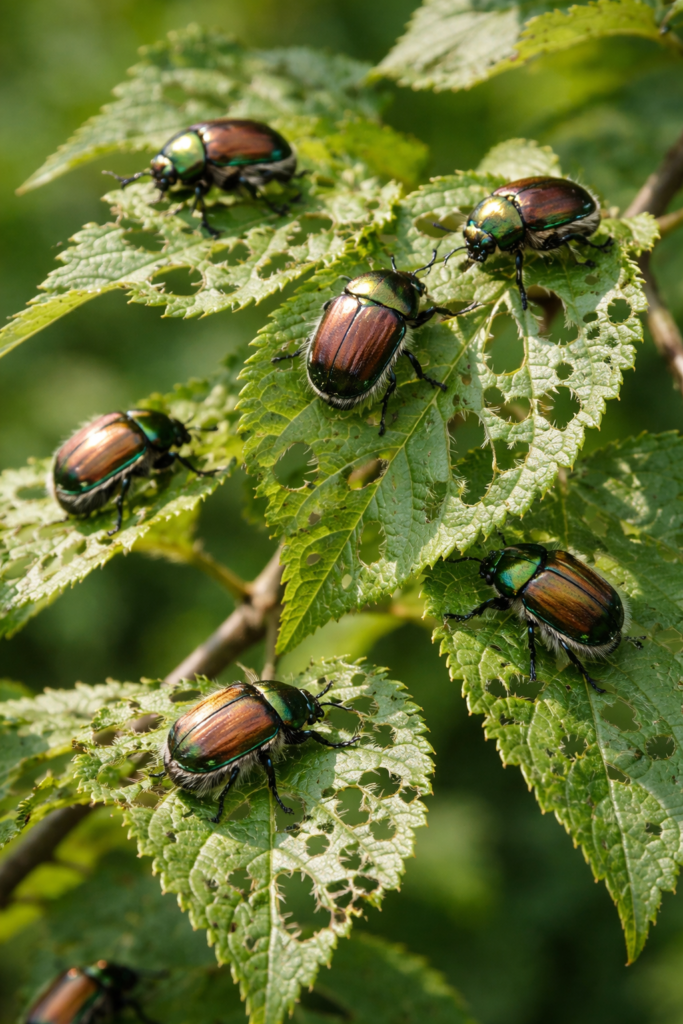
Japanese beetles are metallic green and copper insects that skeletonize tree leaves, eating the green tissue between the veins and leaving a delicate, lace-like appearance behind.
These beetles feed in large groups and can quickly defoliate ornamental trees and shrubs. While healthy, mature trees can usually survive a season of Japanese beetle feeding, repeated defoliation causes severe stress. Hand-picking the beetles and dropping them into soapy water works well for small shrubs.
For larger trees, targeted insecticide sprays can protect the canopy. Use caution with commercial pheromone traps, as they can sometimes attract more beetles to your yard than they capture.
When to Call a Professional for Tree Health
You should contact a certified arborist when you notice severe canopy loss, structural weakness, or widespread pest damage that requires specialized chemical treatments. Diagnosing tree health issues requires a trained eye.
Some symptoms of pest damage mimic those of drought stress or fungal disease. Furthermore, many effective treatments, such as systemic tree trunk injections, require specialized equipment and a commercial pesticide license. An expert can assess the viability of a sick tree and recommend a safe, effective course of action.
Frequently Asked Questions
When is the best time to apply tree pest treatments?
Spring is generally the optimal time for pest treatments. Applying systemic insecticides in the spring allows the tree to absorb the chemicals as it actively pulls water and nutrients up into the new canopy. This timing works exceptionally well for the Emerald Ash Borer and early bagworm prevention.
Are pesticide treatments safe for my property?
Yes, when applied correctly. Always read the label, as the label is the law. To protect pollinators, avoid applying systemic insecticides when nearby trees or groundcovers are actively blooming. Hiring a licensed applicator ensures the treatments are handled safely and legally.
Safeguard Your Landscape Today
Maintaining a healthy canopy requires vigilance, proper identification, and timely intervention. Treating pests early prevents long-term decay and saves you from the safety hazards associated with dead or falling timber.
If you are dealing with a persistent infestation or a brittle, dying tree, do not wait for the problem to escalate. We offer professional tree service, including tree removal and pruning, to keep your property safe and beautiful. Get a free estimate today and let our experts restore your landscape.
Related Post: Tree Pest Protection: How to Keep Nuisance Birds Out of Your Trees