Watching a tree grow from a fragile sapling into a towering canopy is one of the greatest joys of gardening. A healthy tree provides shade, cleans the air, and anchors your landscape for generations. Behind that impressive outward growth is a complex, invisible process happening inside every single leaf.
Photosynthesis is the biological engine that powers a tree’s survival. It turns basic environmental elements into the essential energy the plant needs to thrive. Without this constant internal manufacturing, a tree simply cannot build roots, sprout new leaves, or defend itself against pests.
Understanding how your trees make their food empowers you to become a better caretaker. When you know the mechanics of this natural phenomenon, you can make smarter decisions about watering, pruning, and soil care. This guide explains the science of tree photosynthesis in simple terms, giving you the knowledge to support a healthy, vibrant landscape all year round.
The Basics of Photosynthesis
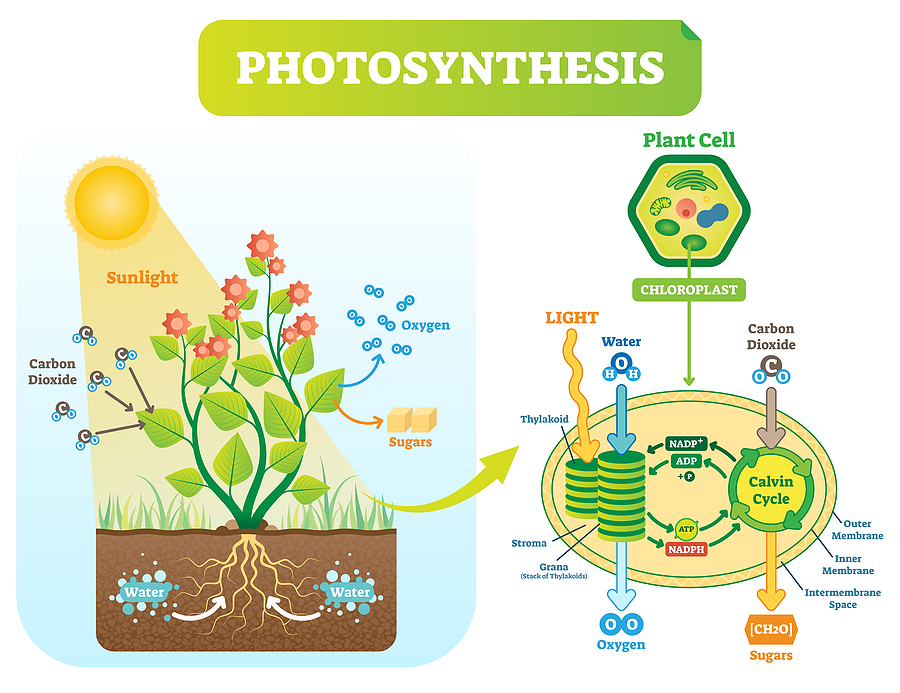
Photosynthesis is how plants create their own food using resources from their environment. Unlike animals that need to consume calories, trees act as tiny sugar factories. To make food, a tree requires three basic ingredients. Sunlight provides the energy required to power the factory. Water is drawn up from the soil through the tree’s extensive root system. Carbon dioxide is absorbed directly from the air through microscopic pores on the leaves called stomata.
The Role of Chlorophyll and Chloroplasts
Inside the leaves are microscopic structures known as chloroplasts. You can think of these as the actual machines on the factory floor. Inside these chloroplasts is chlorophyll, the pigment that gives leaves their green color. Chlorophyll is highly effective at catching solar energy, acting much like a biological solar panel to kickstart the food-making process.
The Stages of Photosynthesis
While we often talk about photosynthesis as a single event, it actually happens in two distinct stages.
Capturing Energy: The Light-Dependent Reactions
The first stage only occurs when the sun is shining. Chlorophyll absorbs solar energy and uses it to split water molecules into oxygen and hydrogen. The tree releases the oxygen back into the air as a byproduct. The remaining energy is temporarily stored in chemical bonds to be used in the next step.
Building Sugars: The Calvin Cycle
The second stage is called the Calvin cycle, or the light-independent reactions. The tree uses the stored energy from the first stage to convert carbon dioxide into glucose, a type of sugar. The tree uses this glucose to grow new wood, develop roots, and maintain its overall health.
Factors Affecting Photosynthesis in Trees
A tree’s ability to produce food depends heavily on its environment. Several external factors can either speed up or slow down this vital process.
Light Intensity and Quality
Trees need adequate sunlight to trigger photosynthesis. If a tree is planted in deep shade but requires full sun, its food production will drop significantly. Conversely, sudden exposure to extreme, intense sunlight can stress a tree and damage its foliage.
Water Availability and Its Impact
Water is a primary ingredient in the photosynthesis recipe. During a drought, a tree will close its leaf pores to prevent internal moisture from escaping. Because these pores are closed, the tree can no longer absorb carbon dioxide, effectively bringing food production to a halt.
Carbon Dioxide Levels in the Atmosphere
Carbon dioxide is essential for building sugars. While atmospheric carbon dioxide is abundant, a tree can only use it if its leaf pores are open. Good airflow around the canopy helps ensure a steady supply of fresh air for the leaves to process.
Temperature: The Ideal Range for Photosynthesis
Photosynthesis operates best within a moderate temperature range. When the weather gets excessively hot, the enzymes responsible for the chemical reactions begin to break down. The tree will slow its food production to protect itself from heat stress.
Nutrient Availability and Soil Health
Trees rely on specific soil nutrients to build chlorophyll. Nitrogen, magnesium, and iron are particularly important. If your soil is heavily compacted or nutrient-poor, the roots cannot absorb these minerals, leading to a breakdown in the entire food-making process.
Photosynthesis in Deciduous and Evergreen Trees
Trees have developed different survival strategies for dealing with changing seasons and cold weather.
Deciduous Trees: Preparing for Winter Dormancy
Deciduous trees like oaks and maples drop their leaves in the fall. As temperatures drop and daylight decreases, the tree stops producing chlorophyll. The leaves change color and eventually fall off. The tree enters a state of dormancy, relying entirely on stored sugars to survive the winter.
Evergreen Trees: Year-Round Photosynthesis
Evergreen trees like pines and spruces retain their foliage year-round. Their needles have a thick, waxy coating that prevents moisture loss. This allows them to continue photosynthesizing even during the winter, although the process slows down considerably due to colder temperatures and shorter days.
Optimizing Photosynthesis for Tree Health
You can directly influence how well your trees produce food through mindful gardening practices.
Proper Watering Techniques
Water deeply and infrequently rather than giving your trees shallow, daily sprinkles. Deep watering encourages roots to grow further down into the soil, protecting the tree against drought and ensuring a steady supply of moisture for photosynthesis.
Fertilization Strategies
Healthy soil leads to healthy trees. If you notice signs of poor growth, conduct a soil test. Applying a balanced fertilizer can replenish missing nutrients like nitrogen and iron, giving the tree exactly what it needs to produce robust, green chlorophyll.
Understanding Sun Exposure Requirements
Always plant the right tree in the right place. Research a tree’s specific light requirements before planting. Placing a sun-loving tree in a heavily shaded corner will starve it of the solar energy it needs to survive.
Pruning for Better Light Penetration
Dense, overgrown canopies block sunlight from reaching the inner leaves. Selective tree pruning opens up the canopy, improving airflow and allowing sunlight to penetrate deeper. Be careful not to remove too much foliage at once, as this reduces the tree’s overall food-producing surface area.
Common Photosynthesis-Related Problems and Solutions
When photosynthesis is interrupted, the tree will show visible signs of distress. Recognizing these symptoms early can save your landscape.
Yellowing Leaves: Nutrient Deficiencies or Water Stress
When leaves turn yellow but the veins remain green, the tree is suffering from chlorosis. This means it lacks the nutrients required to make chlorophyll. This is a common issue in areas with heavy clay soils that lock up vital minerals like iron. Correcting soil drainage or applying targeted soil amendments can resolve this issue.
Slow Growth: Insufficient Light or Resources
A tree that fails to put on new growth is likely struggling to produce enough sugar. Evaluate the surrounding area. Has a neighboring tree grown tall enough to cast excessive shade? Are the roots competing with thick turfgrass for water? Removing the underlying stressor will help the tree recover.
Pest and Disease Impact on Photosynthesis
Insects that chew on leaves physically remove the tree’s solar panels. Fungal diseases that cover leaves in spots or powdery mildew block sunlight from reaching the chloroplasts. Treating pest and disease issues promptly ensures the tree retains its ability to make food.
Frequently Asked Questions
What is the main purpose of photosynthesis for trees?
The primary purpose is to produce glucose (sugar). The tree uses this sugar as energy to build new tissue, grow roots, heal wounds, and defend against pests.
How does photosynthesis help the environment?
As trees take in carbon dioxide to make food, they remove this greenhouse gas from the atmosphere. They then release fresh oxygen as a byproduct, improving overall air quality.
Can trees perform photosynthesis at night?
No. The first crucial stage of photosynthesis requires direct light to capture solar energy. While the tree can process some stored energy at night, the actual collection of power ceases when the sun goes down.
What happens if a tree doesn’t get enough sunlight?
A tree deprived of light cannot produce enough food. It will begin to thin out, drop leaves prematurely, and experience stunted growth. Over time, extreme shade can lead to the tree’s death.
How does photosynthesis contribute to tree growth?
The sugars produced during photosynthesis are converted into cellulose, the main structural component of wood. Every new branch, leaf, and root is built using the energy captured from the sun.
Helping Your Trees Reach Their Full Potential
Understanding the science inside a leaf changes the way you look at your landscape. When you provide the right balance of water, light, and nutrients, you are actively supporting the intricate biological processes that keep your trees strong and resilient. Consistent care and attention ensure your trees can maximize their food production, resulting in a lush, vibrant canopy that enhances your property year after year.
For professional routine tree service in Indianapolis and surrounding towns, trust our team at Complete Tree Care. We serve all of Indianapolis and the surrounding towns. Get a free quote today.
Related Post: Carbon Dioxide and Trees: Why Every Homeowner Matters