Waiting decades for a tree to provide real shade isn’t appealing to most homeowners. If you’ve recently planted a new tree, or you’re planning your next addition to the yard, choosing a fast-growing species can mean the difference between enjoying a mature canopy in your lifetime or leaving it for the next owner.
Indianapolis properties benefit tremendously from fast-growing trees. They provide shade sooner, which can lower cooling costs in summer. They screen out unwanted views from neighbors or busy streets. And they add real value to your property, often faster than slower species that take generations to mature.
But speed isn’t everything. The right tree for your Indianapolis yard also needs to tolerate local soil conditions, survive our winters, and fit the space you have available. Below, we’ll walk through the best fast-growing options for the Indianapolis area, along with the care they need to thrive.
Best Fast-Growing Trees for Indianapolis Properties
Several species stand out for their rapid growth and adaptability to Central Indiana’s climate. Here’s a closer look at four of the fastest-growing trees, along with an honest look at the tradeoffs each one brings.
Tulip Poplar
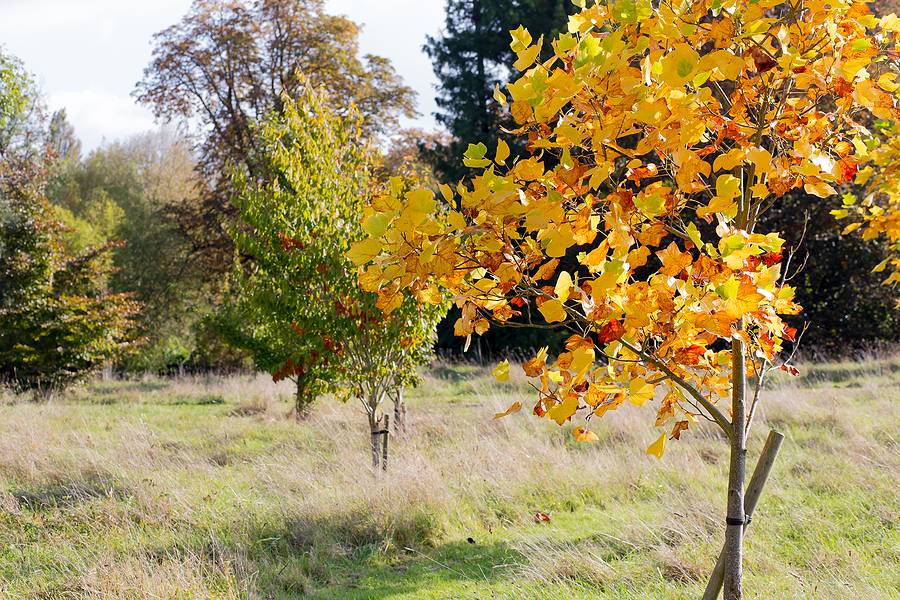
The tulip poplar (Liriodendron tulipifera) is one of the fastest-growing shade trees you can plant in Indianapolis. Estimates vary by source, but PlantingTree reports growth rates of 3 to 5 feet per year, while New England Botanic Garden at Tower Hill notes growth up to 24 inches per year under good conditions. At maturity, tulip poplars can reach around 70 feet tall with a spread of 30 to 40 feet, according to PlantingTree.
This tree needs full sun and consistent moisture to hit those growth numbers, along with plenty of room to spread. If you have the space, a tulip poplar can create meaningful shade within just a few years.
Sycamore
American sycamore (Platanus occidentalis) is another strong choice for homeowners who want quick results. Clemson’s Home and Garden Information Center describes sycamore’s growth as moderate to rapid, averaging around 2 feet per year, while PlantingTree cites a faster range of 3 to 6 feet annually. Either way, this is a tree that won’t keep you waiting.
Sycamores are also remarkably long-lived. The University of Florida IFAS notes a life expectancy of 50 to over 200 years, with mature trees reaching 75 to 90 feet tall and a crown spread of 50 to 70 feet. That combination of fast growth and longevity makes sycamore a smart long-term investment, provided you have a large property to accommodate its size.
Ash Trees
Ash trees have long been admired for their strong wood and vibrant fall color. But if you’re considering ash for a new planting in Indianapolis, there’s a serious caveat you need to know about first.
Emerald ash borer (EAB), an invasive wood-boring beetle, has killed tens of millions of ash trees across the U.S. since it first arrived in 2002, according to the Indiana Parks Alliance. Purdue Entomology confirms that EAB continues to threaten ash trees throughout Indiana, and dead ash trees can pose real safety risks to property. If you already have mature ash trees on your property, professional tree injection treatment is available and should be maintained consistently. For new plantings, though, it’s wise to choose a different species from this list instead.
Willow
Willows are famous for their ability to fill space fast. They tolerate wet soil better than almost any other common shade tree, making them a popular pick for low-lying areas or yards with drainage challenges. If your goal is quick coverage in a moisture-prone spot, willow is worth considering.
That said, willows are generally understood among arborists to have weaker wood and shorter lifespans compared to slower-growing hardwoods. Weigh that tradeoff carefully against your long-term goals for the property.
Medium-Speed Alternatives Worth Considering
Not every homeowner needs the absolute fastest grower. Oaks and maples grow more slowly, but they offer other advantages that make them worth a look.
Oak Varieties for the Indianapolis Climate
Oaks are a long-term investment. They grow more slowly than tulip poplars or sycamores, but they’re known for exceptional structural strength and remarkably long lifespans. Purdue Extension recommends spring planting for oaks in Indiana, as they establish best when planted before the growing season ramps up.
Maple Species for Year-Round Appeal
Maples remain a favorite for their fall color and manageable size, but Purdue Extension’s FNR-433-W publication warns that maple trees are over-planted in many Indiana communities, creating a monoculture risk. If pests or disease strike one maple-heavy neighborhood, the damage can spread fast. Consider mixing maples with other species, like the ones above, for a more resilient landscape.
Climate and Soil Considerations for Indianapolis Trees
Indianapolis sits in USDA Hardiness Zone 6b under the current 2023 map, according to the National Gardening Association’s zip code lookup tool. Some areas of Indiana reach into Zone 7a, while others drop to 5b, so it’s worth confirming your specific zone before selecting a species.
Soil preparation matters just as much as species selection. Purdue Extension recommends digging a planting hole 1 to 1.5 times as wide as the root system, no deeper than the root ball itself. The root flare should sit at or slightly above grade, since planting too deep is one of the leading causes of young tree mortality.
Before you dig, call 811 (Indiana’s Underground Plant Protection Service) to check for utility lines. Purdue also recommends placing large shade trees at least 20 to 40 feet from your house, depending on the mature size of the species.
Care Requirements for Newly Planted Trees
Getting a new tree established takes patience and consistency. Purdue Extension notes that the establishment period can last up to two years, and watering habits during this window matter enormously.
Watering Schedules During Establishment
Aim for at least 1 inch of water per week from rainfall and irrigation combined. Purdue’s rule of thumb is roughly 5 gallons of water per inch of trunk diameter, measured 6 inches above the root crown. A slow, thorough soaking beats light, frequent watering, and overwatering can harm a young tree just as much as underwatering.
Mulching Best Practices
Apply mulch 2 to 3 inches deep, extending out toward the dripline where possible. Keep mulch away from direct contact with the trunk to prevent rot and pest issues.
Early Pruning for Healthy Structure
In the early years, focus pruning on removing dead, broken, or damaged branches, along with suckers and weak or competing stems. This helps establish a strong central leader. Purdue Extension emphasizes that minimal, strategic pruning in a tree’s early life pays off with better structure for decades to come.
Timeline Expectations for New Trees
Growth doesn’t happen on a fixed schedule. In the first year or two, a new tree focuses most of its energy on establishing roots, so visible top growth may look modest. Once established, growth rates pick up, particularly for species like tulip poplar and sycamore.
Keep in mind that full maturity for these species, reaching their eventual height and canopy spread, takes decades. A tulip poplar won’t reach its full 70-foot height overnight, and a sycamore needs many years to fill out its 75- to 90-foot potential. Patience during the establishment phase sets the stage for strong, steady growth down the road.
Why Professional Tree Care Accelerates Growth
A well-planted, well-maintained tree grows faster and lives longer than one that’s neglected, according to Purdue Extension. Routine maintenance, including regular trimming and structural pruning, helps young trees develop strong branch architecture and avoid the kind of damage that stunts growth or shortens lifespan.
If you’re unsure about pruning techniques or you’ve noticed signs of stress in a newly planted tree, consulting a local tree service company is a smart next step.
Frequently Asked Questions
How fast do these trees actually grow?
Growth rates vary by source and by growing conditions. Tulip poplars may grow 2 to 5 feet per year depending on site and soil, while sycamores typically grow 2 to 6 feet annually. Actual results depend heavily on sunlight, soil quality, and consistent care.
Which species is best for my yard?
It depends on your space and priorities. Tulip poplar and sycamore suit larger properties that can accommodate mature heights of 70 feet or more. Willow works well in wet, low-lying areas. Oaks and maples suit homeowners prioritizing longevity and structural strength over speed.
When is the best time to plant?
Early fall is generally the optimum planting window in Indiana, though this window is closing by mid-October as soil temperatures drop. Late winter or early spring is the next best option. Species like red maple, oak, and tulip poplar are often best saved for spring planting, while sycamore and most maples tolerate fall planting well.
Do fast-growing trees live as long as slower ones?
It varies by species. Sycamores can live 50 to over 200 years despite their rapid growth, according to Clemson and University of Florida IFAS. Other fast growers, like willow, are generally considered shorter-lived with weaker wood compared to slower-growing hardwoods like oak.
Choosing the Right Tree for Long-Term Success
Tulip poplar and sycamore offer some of the fastest growth available for Indianapolis properties, while oaks and maples provide a steadier, longer-term payoff. Ash trees bring beauty and strength but carry real risk from emerald ash borer, making them a poor choice for new plantings right now. Willow fills space quickly in wet areas but comes with tradeoffs in wood strength and lifespan.
Whatever species you choose, proper establishment care determines whether your tree thrives or struggles. Consistent watering, correct mulching, and early structural pruning give any new tree its best shot at reaching its full potential.
Complete Tree Care in Indianapolis, Indiana. Take care of your newly planted trees with professional routine tree service. Schedule trimming, pruning and more!
Related Posts:
Best Shade Trees to Cool Your Indiana Yard
Best Drought Resistant Tree Species for Midwest Landscapes
Top Flood-Resistant Trees for Zone 6 and 7