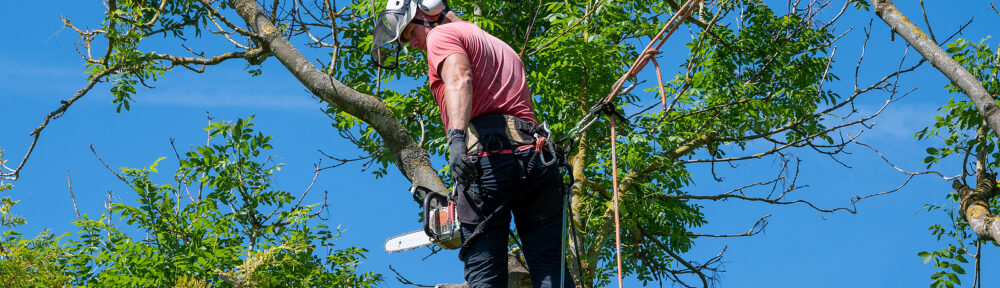
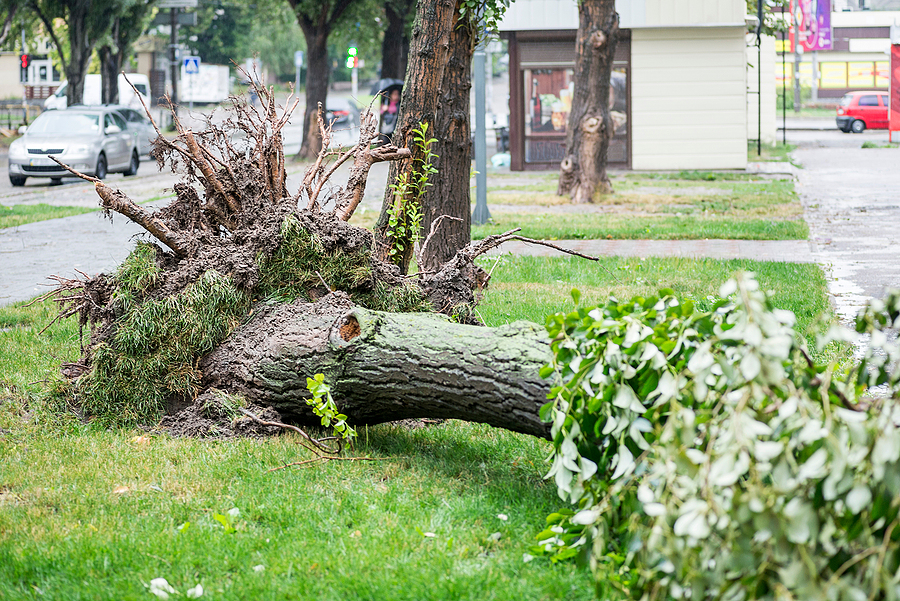
A storm rolls through, and the next morning you find a tree down across your yard and your neighbor’s. Now what? Fallen trees create more than yard work—they create legal questions about liability, cost, and cleanup that many Indiana homeowners aren’t prepared to answer.
This guide breaks down Indiana property line basics, who’s responsible for a fallen tree, and how to prevent the next dispute before it starts.
How Are Property Lines Determined in Indiana?
Your property line isn’t defined by where your fence sits or where your neighbor has always mowed. It’s defined by your deed’s legal description and confirmed through a licensed land survey.
Why a Property Survey Matters
Fences, hedges, and landmarks shift over time—or were never accurate to begin with. A professional survey is the only reliable way to confirm exactly where your property ends and your neighbor’s begins. If a tree dispute escalates, this documentation becomes essential.
Common Misconceptions About Boundaries
Many homeowners assume a tree belongs to whoever’s side the branches lean toward, or that a tree is “shared” simply because it’s near the line. Indiana courts have addressed this directly: in Luke v. Scott (1933), a tree belongs to the owner whose property the trunk stands on. If the trunk sits exactly on the boundary line, both property owners share ownership, and any action—including tree trimming—requires mutual agreement.
Who Is Legally Responsible for a Fallen Tree?
Liability depends heavily on why the tree fell, not just where it landed.
Indiana’s “Act of God” Standard
When a healthy tree falls because of a storm, high winds, or another natural event, Indiana generally does not hold the tree’s owner liable. Courts treat this as an unavoidable occurrence rather than negligence.
When Negligence Changes the Outcome
If the tree was visibly dead, diseased, or a known hazard that the owner ignored, the outcome can shift. A neighbor who suffers property damage may have grounds for a civil claim if they can show the owner knew about the risk and failed to address it.
Your Rights to Overhanging Branches
Indiana case law, including Scheckel v. NLI, Inc. (2011), confirms that a property owner can trim branches that extend into their airspace to prevent damage or encroachment. However, cutting branches out of spite—if it damages or kills the tree—can create liability for the person who did the cutting. Separately, Wolf v. Forcum (1959) established that a tree blocking your view isn’t a legal violation; Indiana doesn’t guarantee an unobstructed view of your own property.
Who Pays for Tree Removal and Damage?
Cost Responsibility: Negligence vs. Natural Causes
As a general rule, if a tree falls due to a storm, the property owner where it lands typically bears responsibility for tree removal and repair—often through their own homeowner’s insurance. If negligence caused the fall, the negligent owner may be responsible for covering the damage instead.
Insurance Coverage Considerations
Homeowner’s insurance often covers damage from fallen trees, particularly when a structure is damaged or debris blocks access to your home. Coverage and removal costs vary by policy, so review your specific terms or speak with your insurer before assuming what’s included.
When Shared Responsibility Applies
Because a boundary-line tree is jointly owned, cleanup and cost after a fall may need to be a shared decision between neighbors rather than one party’s sole obligation.
Preventing Future Tree Disputes
A little prevention goes a long way toward avoiding disputes altogether.
- Schedule regular tree inspections. Catching disease or structural weakness early reduces the chance of a sudden, costly failure.
- Trim overhanging branches proactively. Address encroachment before it becomes a conflict.
- Document tree conditions over time. Photos and inspection records can protect you if a liability question arises later.
Frequently Asked Questions
Can my neighbor charge me for removing a fallen tree from their property?
If the tree fell due to a storm or other natural cause, you’re generally not liable for removal costs on your neighbor’s property. If the tree was diseased or neglected and you knew about it, you may share responsibility.
What if the tree was diseased and I didn’t know?
Liability typically hinges on whether you reasonably should have known about the hazard. An unnoticed internal issue is treated differently than a visibly dead or leaning tree.
Does homeowners insurance cover tree damage across property lines?
Often, yes—particularly when a structure is damaged. Coverage details vary by policy, so confirm specifics with your insurance provider.
Get a Professional Assessment Before a Storm Decides for You
Property line tree disputes are rarely simple, and every situation carries its own details that affect liability and cost. This article offers general information, not legal advice—for specific concerns, consult an attorney or your insurance provider.
If you have a tree near your property line that concerns you, don’t wait for the next storm to find out how it falls. Contact Complete Tree Care in Indianapolis, Indiana, for a professional tree assessment and removal services you can trust.
Related Posts:
Is it Expensive to Remove a Tree That Fell Over?
Navigating Neighbor’s Trees: Your Property Rights Guide
Tree on a Power Line? Essential Safety Steps to Take Now