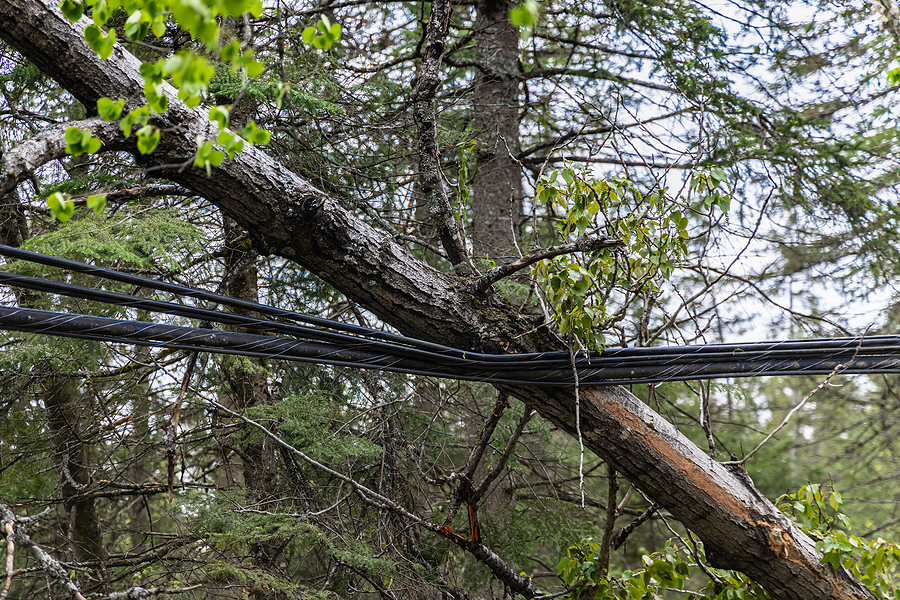
A heavy storm rolls through your neighborhood, bringing high winds and soaking rain. Suddenly, you hear a loud crash outside. You look out the window and see that a large tree has fallen directly onto a power line. It is a terrifying scenario, and the immediate risks are incredibly high.
Downed power lines are not just an inconvenience that causes a neighborhood blackout. They are active, life-threatening hazards. Electricity seeks the easiest path to the ground, and a fallen tree contains moisture that conducts that electricity perfectly. Stepping anywhere near the area can result in a fatal shock.
Knowing exactly how to react in the first few minutes can save lives. This guide provides clear, step-by-step instructions on what to do when a tree brings down a power line. We will cover the immediate safety precautions, who you need to contact, and how to safely handle the cleanup and insurance claims once the immediate danger has passed.
What to Do When a Tree Falls on a Power Line
Your immediate reaction to a fallen tree might be to inspect the damage to your property. You must resist this urge entirely when power lines are involved.
Prioritizing Safety: Staying Away and Calling for Help
The most critical rule is to stay far away from the fallen tree and the downed line. Utility companies recommend staying at least 25 to 30 feet away from any downed wire. You must assume that any fallen line is fully energized and deadly, even if it is not sparking or making noise. Keep children and pets securely indoors.
Contacting Emergency Services and Your Utility
Your first phone call should be to 911. Dispatchers can send local fire and police departments to secure the perimeter and keep bystanders away.
Next, contact your local utility company to report the downed line. If you live in the Indianapolis area, for example, you would report the emergency to AES Indiana. The utility company will dispatch an emergency crew to cut the power to that specific line, making the area safe for emergency responders and tree removal experts.
Assessing the Situation from a Safe Distance
Do not attempt to walk around the tree to see the extent of the damage. If you must assess the situation, do so from inside your home or from a significant distance away. If you are in a vehicle and a line falls on it, stay inside the car. The rubber tires offer some insulation. Call 911 from your cell phone, and warn anyone who tries to approach to stay far back.
Why You Should Never Approach a Downed Tree Near a Power Line
The risks associated with fallen power lines are often invisible to the naked eye. Electricity behaves in ways that can catch even cautious people off guard.
The Invisible Threat: Electrocution Risks
When a live power line hits the ground, electricity fans out in concentric circles. This creates what professionals call “step potential.” If you walk near a downed line, the voltage can differ from one foot to the other. The electricity will travel up one leg and down the other to reach the ground, causing severe or fatal electrocution.
Similarly, touching anything in contact with the wire—like a tree branch, a puddle of water, or a metal fence—can lead to electrocution.
The Danger of Arcing and Fires
Live wires can arc, sending bright, incredibly hot electrical sparks through the air. This arcing can easily ignite the wood of the fallen tree, dry grass, or nearby structures. Approaching an arcing wire exposes you to severe burns and the risk of a sudden, rapidly spreading fire.
The Role of Emergency Services and Utility Companies
Once you make the necessary calls, emergency crews will take over to neutralize the threat.
How They Respond to Downed Power Line Incidents
First responders will typically arrive first to block off the street and ensure nobody accidentally walks into the danger zone. They cannot move the tree or fix the wires. Only trained utility workers have the specialized equipment to de-energize the power grid.
What to Expect During the Restoration Process
The utility company’s primary job is to make the area safe and restore power. They will cut the electricity to the broken line and untangle the wires from the fallen branches.
It is important to note that utility companies usually only clear the tree debris enough to repair their equipment. For instance, AES Indiana will remove debris during routine, scheduled tree trimming. However, during an emergency storm response, they will cut the tree away from the line to make it safe, but the property owner is responsible for removing the resulting wood and debris.
After the Immediate Danger: Dealing with Tree Removal and Damage
Once the utility company confirms the power line is dead and the area is safe, you must figure out how to clean up the mess.
Hiring a Qualified and Insured Tree Removal Service
Removing a massive fallen tree is incredibly dangerous work. It requires heavy machinery, chainsaws, and an intricate knowledge of how wood shifts under pressure.
Why Professional Help is Essential
Do not attempt to clear large tree debris yourself. A heavy trunk can roll unexpectedly, or branches under tension can snap back with bone-breaking force. Hiring a professional tree removal service ensures the job is done safely without causing further damage to your home or yard.
Questions to Ask a Tree Removal Company
When hiring a service, verify their credentials. Ask for proof of liability insurance and worker’s compensation. Inquire if they have experience working alongside utility crews and if they provide assistance with insurance claims.
Insurance Coverage for Tree-Related Damages
A fallen tree can cause significant financial stress, but your insurance policy may offer relief.
Homeowner’s Insurance and Fallen Trees
If a healthy tree falls due to a covered peril—like a severe windstorm—your homeowner’s insurance will typically cover the damage it causes to insured structures, such as your house or a detached garage. They often pay for the tree’s removal up to a specific limit, usually around $500 to $1,000, depending on your policy. If the tree falls entirely in your yard without hitting anything, insurance generally will not cover the removal cost.
Documenting the Damage for Claims
Before the tree removal company hauls the debris away, take detailed photographs of the fallen tree and any damage to your property. This documentation will be crucial when you file a claim with your insurance adjuster.
Preventative Measures: Avoiding Future Incidents
The best way to handle a fallen tree is to prevent it from falling in the first place.
Regular Tree Maintenance and Trimming
Keep the trees on your property healthy and well-pruned. Removing dead branches reduces the surface area that catches high winds, making the tree more structurally sound during a severe storm.
Identifying and Addressing Hazardous Trees
Walk your property regularly to look for warning signs. Watch for deep cracks in tree trunks, hollow or decaying wood, and trees that have suddenly developed a severe lean. If you notice any of these signs, have a certified arborist inspect the tree immediately.
Planning for Storms and High Winds
Before severe weather hits, secure loose items in your yard that could be blown into power lines. Keep emergency numbers for your utility company and a trusted tree removal service saved in your phone.
FAQ: Your Questions Answered
Is it safe to drive over a downed power line?
No. You should never drive over a downed power line. The line can become tangled in your vehicle’s axles, pulling down the utility pole or electrifying your entire car. Always turn around and find an alternate route.
Who is responsible for removing a tree that falls on power lines?
The utility company will remove the portions of the tree necessary to repair the power line and restore electricity. However, the homeowner is almost always responsible for removing the remaining wood and debris left in their yard.
Can I cut branches off a tree that’s on a power line myself?
Absolutely not. Wood contains moisture and is an excellent conductor of electricity. Touching a branch that is resting on a live wire can result in immediate, fatal electrocution. Leave all cutting to the utility company.
What if the power line is sparking or smoking?
Stay as far back as possible and call 911 immediately. Sparking and smoking indicate the line is highly energized and poses a severe fire and electrocution risk. Keep all bystanders and pets away from the area.
Protect Your Property with Professional Help
A tree falling on a power line is an intense situation that requires immediate, cautious action. Always prioritize your safety by keeping your distance, calling 911, and notifying your local utility company. Never assume a downed line is safe to approach, even if the power in your house is out.
Once the utility company has secured the electrical lines, dealing with the massive debris left behind is the next hurdle.
If you need fast, reliable emergency tree removal in Indianapolis, we are here to help. Complete Tree Care has the heavy equipment and the expertise to safely clear fallen trees from your property. We also provide full insurance claim work to make the recovery process as stress-free as possible. Request a free estimate today and let our professionals handle the heavy lifting.
Related Post: Understanding Insurance Coverage for Property Damage Caused by Fallen Trees and Limbs