Discovering a split in your tree’s trunk can be alarming. It’s not just an aesthetic issue; a deep crack can compromise the structural integrity of the entire tree, posing a safety risk to your home and family. While trees are remarkably resilient, they aren’t invincible, and certain types of damage require immediate attention to prevent failure.
In Indiana, our trees face a unique set of challenges—from the bitter freeze-thaw cycles of January to the intense summer storms that roll across the plains. Understanding why these splits happen and knowing when a tree can be saved is crucial for maintaining a safe and beautiful landscape.
Identifying Common Tree Trunk Splits
Not all cracks are created equal. Some are superficial wounds that heal on their own, while others indicate a tree in distress. Identifying the type of split is the first step toward finding a solution.
Frost Cracks and Sunscald (Southwest Injury)
If you notice a long, vertical crack on the south or southwest side of a young tree, you are likely looking at “Southwest Injury.” This is incredibly common in Indiana winters.
It happens when the sun heats up the bark during a cold winter day, stimulating activity in the cells. When the sun sets or goes behind a cloud, temperatures drop rapidly, causing the water inside the cells to freeze and the bark to split. Thin-barked species common in Indianapolis landscapes—such as Maples (Acer), Redbuds (Cercis), and Crabapples (Malus)—are particularly susceptible.
Growth Cracks
Sometimes a tree simply grows faster than its bark can expand. These cracks usually appear as vertical splits where you can see healthy inner bark healing over. They are often a sign of a vigorous, healthy tree rather than a dying one and typically do not require intervention.
Storm Damage and Shear Cracks
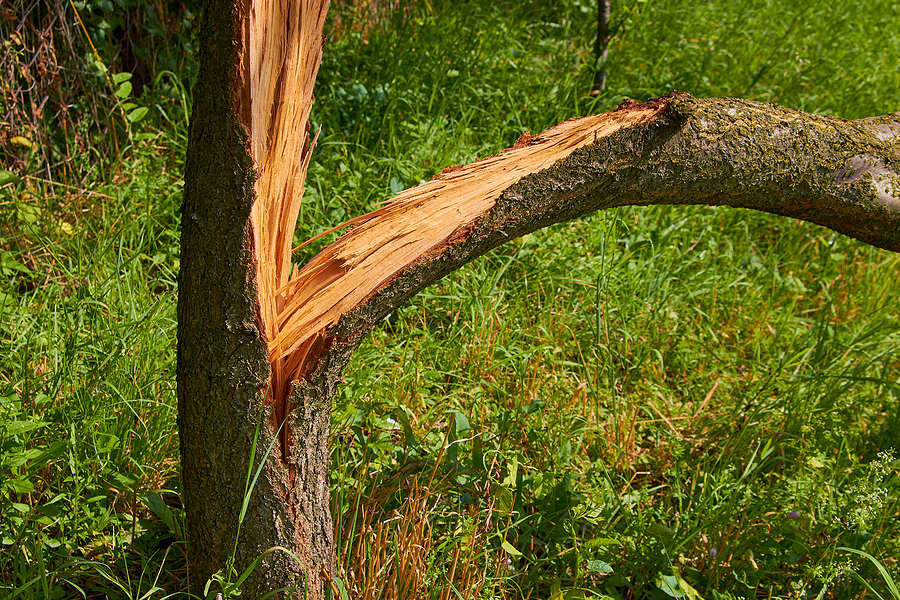
Indiana’s severe thunderstorms and high winds can twist and pull trees, causing the trunk to split violently. These shear cracks often occur at the crotch where two co-dominant stems meet (a “V” shape). Unlike frost cracks, these structural failures are immediate threats to the tree’s stability.
Assessing the Severity of the Damage
Before you rush to the hardware store, you need to assess whether the tree is a candidate for repair or if it has become a hazard.
Signs the Tree Might Be Saved:
- The split is a simple frost crack that hasn’t penetrated deeply into the wood.
- The tree has a full, healthy canopy of leaves.
- There is evidence of “callus tissue” or “wound wood” forming along the edges of the crack (a sign the tree is sealing itself).
- The tree is young and vigorous.
Signs the Tree May Need Removal:
- The crack goes completely through the trunk.
- The split is located at a major fork in the main trunk (co-dominant stems) and is actively widening.
- You see signs of internal decay, such as mushrooms growing at the base or carpenter ants in the crack.
- The tree leans significantly or targets a structure, like your house or driveway.
- More than 25-50% of the trunk’s circumference is damaged.
If you are unsure, do not guess. A tree with significant trunk damage can fall without warning.
Treatment and Repair Options
If the damage is manageable, there are several methods arborists use to help a tree recover. It is important to note that trees do not “heal” like human skin; they “seal” or compartmentalize damage.
Cabling and Bracing
For splits that compromise structural integrity—particularly those at the crotch of two stems—cabling and bracing are the industry standards (specifically ANSI A300 Part 3 standards).
- Bracing: This involves installing steel rods through the split to bolt the trunk back together. This prevents the crack from twisting or opening further.
- Cabling: High-strength steel or synthetic cables are installed high in the canopy to limit movement. By reducing how much the branches sway in the wind, the cable reduces the stress on the split trunk below.
▶ Note: This is a complex procedure that should only be performed by a professional arborist to ensure the hardware is sized and installed correctly.
Bark Tracing
For jagged wounds where bark has been torn away (perhaps by a lawnmower or vehicle), you can help the tree by “bark tracing.” This involves using a sharp, sterilized knife to carefully cut away the loose, ragged bark edges back to healthy wood. This creates a clean edge that helps the tree form callus tissue faster.
Request a Free Estimate for Tree Service Today ✅
What Not to Do: Avoid Wound Dressings
For decades, it was common practice to paint tree wounds with tar or “sealant.” We now know this is harmful. Research from Purdue University Extension and other experts shows that wound dressings can trap moisture and decay-causing fungi inside the wound, actually slowing down the tree’s natural sealing process.
Do not paint, seal, or cover the wound. Let the tree seal itself naturally with oxygen and time.
Prevention Techniques for Indiana Trees
The best cure for a split trunk is preventing it in the first place.
- Wrap Young Trees: To prevent Southwest Injury, wrap the trunks of young, thin-barked trees (like Maples and Redbuds) with white tree guards or paper tree wrap in late autumn. Remove the wrap in early spring to prevent moisture buildup and insect infestation.
- Proper Pruning: Many structural splits happen because of “co-dominant stems”—two trunks growing side-by-side that push against each other as they expand. Structural pruning when the tree is young can remove these weak attachments before they become a liability.
- Water During Drought: Drought-stressed trees have brittle wood that is more prone to cracking. During our hot Indiana summers, deep watering can keep the wood flexible and resilient. Look into recommended drought-resistant tree species for Indiana.
- Mulch Correctly: A ring of mulch around the base (but not touching the trunk!) protects the tree from lawnmower strikes, a common entry point for decay.
When to Call a Professional Tree Service
Tree work can be dangerous, especially when dealing with compromised trunks. You should call a professional tree care contractor if:
- You need cabling or bracing installed.
- The tree is large enough to damage property if it falls.
- You cannot determine if the crack is superficial or structural.
- The tree shows signs of rot or fungal growth inside the crack.
Conclusion
A split trunk doesn’t always mean the end of your tree’s life, but it is a serious condition that demands respect and a professional assessment. By identifying and addressing cracks early, avoiding the use of harmful sealants that can trap moisture and decay, and implementing proper support systems like cabling or bracing when necessary, you can often preserve these valuable landscape assets, allowing them to thrive for many more years to come.
If you are concerned about a crack in your tree or need an expert opinion on stability, don’t wait for the next storm to test its strength. Contact our team at Complete Tree Care, today. We provide comprehensive tree services across Indianapolis and the surrounding areas. Let us help you keep your trees safe, healthy, and standing tall.
Call to Request a Free Estimate
Related Post: What Causes Bark Splitting in Trees?