For decades, painting tree wounds with black tar-like sealants felt like responsible tree care. Hardware stores stocked shelves with wound dressings, and many homeowners and landscapers applied them as a matter of routine after pruning. The logic seemed sound: cover the wound, keep disease out, help the tree recover faster.
The problem? The science tells a different story. Research spanning more than 13 years and 275 treated trees has confirmed that wound dressings do not prevent decay—and in many cases, actively make things worse. According to Dr. Linda Chalker-Scott, Extension Horticulturist at Washington State University, there is “not one shred of scientific evidence” to support the wound-healing properties claimed by commercial tree wound products.
This post covers what’s really happening inside a wounded tree, why wound dressings interfere with that process, and what you should do instead to support long-term tree health.
The Science Behind How Trees Seal Their Own Wounds
Trees Compartmentalize, They Don’t Heal
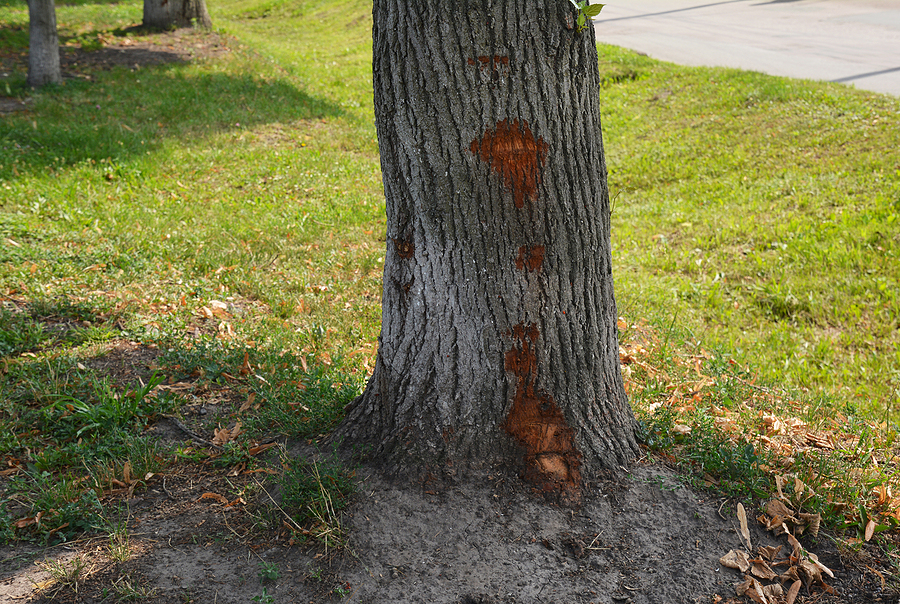
Trees don’t heal wounds the way humans do. Human skin regenerates—new cells grow over a cut, and the damaged tissue is replaced. Trees work differently. Rather than regenerating tissue, they seal off the damaged area and grow around it. This process is called compartmentalization, or more formally, the Compartmentalization of Decay in Trees (CODIT).
Dr. Alex Shigo, a plant pathologist whose work transformed modern arboriculture, identified four distinct “walls” that a tree builds in response to a wound:
- Wall 1 plugs the xylem vessels above and below the wound to slow vertical decay
- Wall 2 forms denser latewood cells to resist circumferential spread of decay
- Wall 3 activates radial parenchyma cells to create a chemical barrier against inward decay
- Wall 4 forms a new protective barrier zone around the wound—the strongest of the four, and the tree’s ultimate containment strategy
Together, these barriers isolate the injured area from healthy wood, preventing decay from spreading through the rest of the tree. The callus tissue that forms along the wound edges continues to grow inward, eventually covering the exposed surface entirely.
Why Oxygen Is Essential to Tree Recovery
One of the most critical—and often overlooked—aspects of wound recovery is oxygen. According to Purdue University Extension, oxygen is necessary for proper wound closure. When a wound is covered with any material that restricts airflow, the tree’s ability to form callus tissue is compromised.
Petroleum-based products, in particular, are not recommended. These sealants create an oxygen-deprived environment directly over the wound—exactly where the tree needs open air to initiate and sustain its natural repair response. The result: slower callus formation, delayed compartmentalization, and a window of vulnerability that can last far longer than it should.
Common Myths About Tree Wound Dressing
Myth 1: Wound Dressing Prevents Disease and Pest Entry
It sounds logical, but wound dressings don’t form the kind of barrier that keeps out fungi, bacteria, or insects. Research confirms that wound dressings do not prevent the entrance of decay-causing organisms. Insects are drawn to trees in distress by phytochemicals released from exposed tissue—and applying a sealant doesn’t mask that signal. In fact, the moisture-retaining properties of most wound dressings can create a more hospitable environment for decay organisms, not less.
Myth 2: Trees Can’t Seal Themselves Without Help
Healthy trees are remarkably capable. A young, vigorous tree planted in well-drained soil with adequate nutrients can seal small wounds within weeks. According to research published in Arboriculture & Urban Forestry, most wounds close within 10 to 20 weeks when left to heal naturally. The tree doesn’t need assistance—it needs the right conditions and the freedom to respond on its own terms.
Myth 3: Wound Dressing Speeds Up Healing
This myth may be the most persistent—and the most counterproductive. Covering a wound with a sealant doesn’t accelerate recovery; it slows it. Wound dressings interfere with the oxidative processes that trigger callus formation. No callus formation means no compartmentalization. The very product intended to help the tree is working against it.
Why Wound Dressing Can Actually Harm Your Trees
Trapped Moisture Creates the Conditions for Decay
Wound dressings seal in more than just the wound—they seal in moisture. A dark, moist environment under an impermeable coating is ideal for fungal growth and bacterial activity. Rather than protecting the exposed wood, many sealants create a slow-developing decay problem that can spread beneath the surface without any visible warning signs.
Disrupted Compartmentalization Leaves Trees Vulnerable
By inhibiting the oxidative processes that drive compartmentalization, wound dressings prevent Wall 4—the barrier zone—from forming effectively. This is the most critical structural response a tree makes after an injury. When it’s disrupted, decay has a clearer path into the healthy wood of the trunk, potentially compromising the tree’s structural integrity over time.
The Research Is Clear
Over 13 years of controlled studies on 275 treated and dissected trees, published in Arboriculture & Urban Forestry, confirmed that wound dressings do not prevent decay. Purdue University Extension echoes this: research indicates that any type of wound dressing can slow the healing process. The science is not ambiguous—wound dressing causes more problems than it solves.
The Natural Tree Healing Process
How Long Does It Take for a Tree to Seal a Wound?
Healing timelines vary based on species, tree health, wound size, and the time of year the wound was made. Small wounds created during the spring or summer growing season can close within a few weeks. Most wounds close within 10 to 20 weeks, according to research in Arboriculture & Urban Forestry.
Species matters too. Some trees, like oaks, are highly effective compartmentalizers. Others, like birches and maples, may be more susceptible to decay spreading from unmanaged wounds.
Factors That Support Natural Healing
A tree’s ability to compartmentalize effectively depends largely on its overall health. Trees that are:
- Planted in well-drained soil with appropriate texture and nutrition
- Adequately watered, especially during dry periods
- Free from secondary stressors like soil compaction or pest damage
…will seal wounds faster and more completely than stressed or nutrient-deficient trees. Supporting the tree’s broader health is the best thing you can do after a wound occurs.
What to Do Instead of Wound Dressing
Make Proper Pruning Cuts
The most important thing you can do to minimize wound-related damage is to prune correctly from the start. Modern arboriculture, guided by Dr. Shigo’s CODIT research, emphasizes the branch collar cut—a cut made just outside the swollen collar of tissue where the branch meets the trunk.
This collar contains the specialized cells that form Wall 4. Leaving it intact allows the tree to mount its most effective compartmentalization response. Flush cuts—those made level with the trunk—remove the collar entirely and dramatically slow wound closure. If DIY is not your strong suit, it is encouraged to outsource professional tree pruning service.
Use Sharp, Clean Tools
Ragged cuts from dull blades tear bark and wood tissue, enlarging the wound and making compartmentalization harder. Sharp tools create clean edges that allow callus tissue to form efficiently. Sterilizing tools between cuts also reduces the risk of transmitting disease from one branch or tree to another.
Prune at the Right Time
Optimal pruning time for most trees is fall or winter, when temperatures are lower and fungal and insect activity is reduced. If pruning during warmer months is unavoidable for disease-prone species, a light application of an appropriate fungicide or insecticide—not a wound sealant—may be warranted in specific situations.
Support the Tree’s Overall Health
After pruning or a damaging event, focus on the conditions that support recovery: adequate water, proper mulching to retain soil moisture, and avoidance of further mechanical damage from lawn equipment.
FAQ
How long does it take for a tree to seal a wound naturally?
Most tree wounds close within 10 to 20 weeks. Small wounds made during the active growing season—spring and summer—may close in just a few weeks. Larger wounds, or wounds on stressed trees, can take considerably longer.
What should I do if my tree has a large wound?
Leave it exposed and focus on supporting the tree’s overall health through adequate water and nutrition. If the wound is significant or you’re concerned about structural stability, consult a certified arborist who can assess the damage and recommend an appropriate course of action.
Is there any situation where wound dressing is recommended?
There is one narrow exception. In regions where oak wilt disease is present, wound paint may be applied immediately after pruning to prevent sap beetles from transmitting the oak wilt fungal pathogen. This is a disease prevention measure, not a wound healing one, and it applies specifically to oak trees in affected areas.
Does the time of year affect how well a tree heals?
Yes. Wounds made during the growing season trigger faster callus formation because the tree has active energy reserves. However, pruning in fall or winter reduces exposure to insects and fungi, which can complicate the healing process for susceptible species.
Put the Wound Paint Down
Trees are far more capable than they’re often given credit for. Through the CODIT process, a healthy tree builds its own layered defense system—no sealant required. Wound dressings, however well-intentioned, disrupt this process by blocking oxygen, trapping moisture, and interfering with the callus formation that drives natural recovery.
The best approach is also the simplest: make clean, proper pruning cuts, leave wounds exposed to the air, and support your tree’s overall health. Nature will handle the rest.
Need expert tree care in Indianapolis, Indiana? The team at Complete Tree Care is here to help. Whether you need routine pruning or tree removal, our certified professionals use science-backed techniques to protect the health and longevity of your trees. Request a free quote today.
Related Posts:
The Ultimate Guide to Protecting Trees Against Woodpecker Damage
How to Stop Deer Damage to Trees in Fall
Can A Split Tree Trunk Be Saved? Solutions for Indiana Homeowners