Will a River Birch Tree Damage My House?

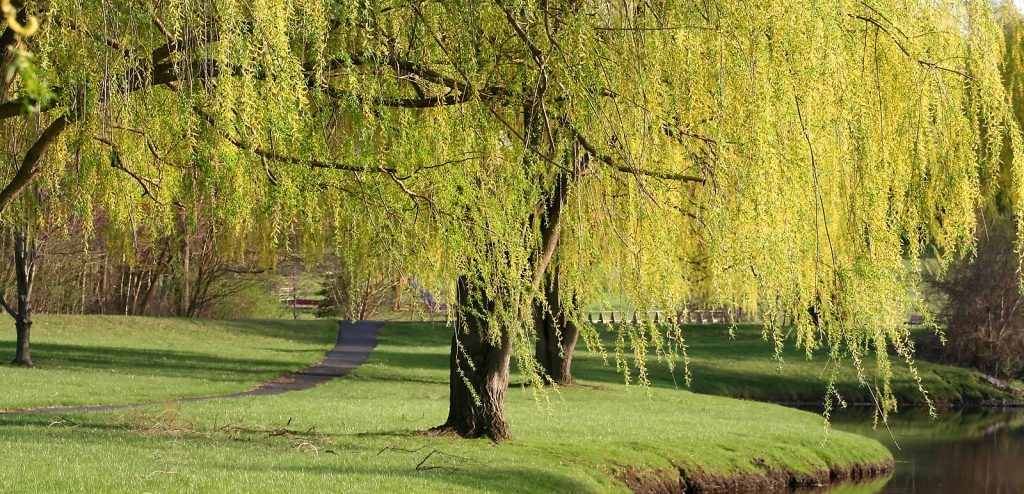
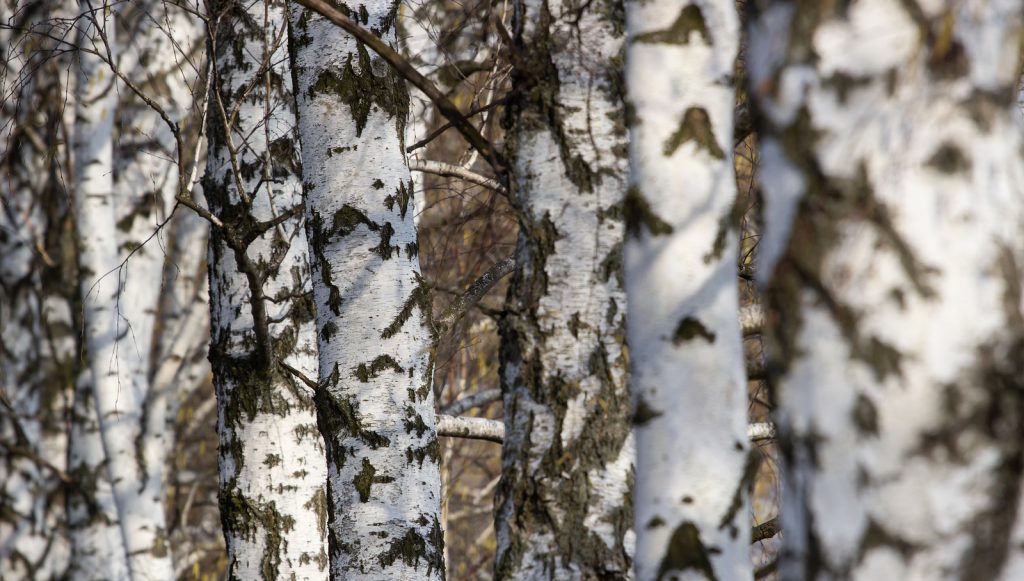
River Birch trees, with their shimmery trunks and draping leaves, are absolutely lovely come spring and summer. As a water-loving tree species, they adapt well in moist conditions, especially near banks of rivers, hence their name. But many property owners are weary of planting new River Birch trees near their house in fear that the roots might grow excessively and damage the underground plumbing, and ultimately, the foundation.

Whether you are interested in purchasing a home with River Birches along the property, or you wish to add some to your existing landscaping, have no fear that they will give you trouble. Continue reading to learn what you need to know about River Birch tree care, including how to prevent their roots from causing damage on your property.

Indianapolis Tree Service 317-783-2518

About River Birches

River Birches (Betula nigra) are wetland-loving, water-thirsty trees that grow in U.S. Department of Agriculture plant hardiness zones 4 through 9. They require an abundant amount of water, which is why they are often found growing along the banks of rivers and other year-round bodies of water. Their root systems are very strong, and spread wide as they grow.

When River Birch trees do not get the water they need, they will stretch and lengthen toward any source of water. This is the behavior that has many property owners concerned. But their roots are not able to grow strong enough to damage a house or other structure. So there is really no need to worry about these trees on your property, especially if they are on the bank of a year-round body of water.

River Birch Tree Care

Here is exactly what you need to know about River Birch trees to put your mind at ease about the potential for property damage: So long as River Birches have ample amounts of water, they should never pose a problem to your underground plumbing or property’s foundation. Other than ample water, River Birch trees are low-maintenance, fast-growing, and highly disease-resistant.

Routine Tree Service is Key to a Healthy Landscape

Indianapolis Tree Care 317-783-2518

Call Complete Tree Care at 317-783-2518 for experienced tree service in Indianapolis and throughout Central Indiana. We offer a wide range of residential and commercial tree services, including tree removal, tree trimming, stump grinding, stump removal, lot clearing, and more. If you want professional and efficient service you can trust, Complete Tree Care is the right call!

3 Common Types of Tree Ordinances

When it comes to trees, there are certain rules and regulations we all must follow. There are three primary facets of tree ordinances that exist in most states, although they may vary among jurisdiction. These ordinances govern view, protection, and streets.

Continue reading to learn more about each tree ordinance, and how to find your town’s specific laws surrounding landscaping trees.

Indianapolis Tree Service 317-783-2518

❶ View Ordinances

There are typically tree view ordinances in every state, and even often incorporated in neighborhood association by-laws. These ordinances are meant to regulate obstruction of valuable views and sunlight between individual properties. For instance, if a homeowner plants a large tree that blocks sunlight to their yard, the homeowner can be in violation of such ordinances if they exist in their city. Such violations generally lead to warnings; but if nothing is done to mollify the warning, the penalties can increase to fines and litigation.

❷ Street Ordinances

There are also tree ordinances that regulate the maintenance and safety of private trees on public travel paths. Such paths include sidewalks, roads, creeks, parking lots, parks, and more. If your tree is blocking a public right-of-way, like one of these paths just mentioned, you could be in violation of a tree street ordinance.  The same consequence applies if your tree is posing some sort of public hazard. There are also similar ordinances that mandate certain tree planting requirements, such as in parking lots.

❸ Protection Ordinances

In virtually every city and town, there are trees that have certain essential value or historical significance. For this reason, there are also regulations that protect such trees. These are referred to as tree protection ordinances. If a protected tree needs to be removed or trimmed, a specific permit of authority is required. So always be very careful when tampering with a tree that is not on your property; because you never know if it is protected by local jurisdiction.

Where to Get Professional Tree Advice

Indianapolis Tree Care 317-783-2518

Call Complete Tree Care at 317-783-2518 for Indianapolis tree service you can trust. We are licensed and insured tree care contractors who serve both residential and commercial properties with a wide range of professional tree care services, including stump removal, lot clearing, storm damage clearance, and more. Request an estimate, today.

How to Dispose Your Christmas Tree

Depending on the town you live in, there are specific rules for tossing out old Christmas trees. Continue below to learn where you can locate your town’s set of instructions for Christmas tree disposal.

For your convenience, we have taken the liberty to list the information for some prevalent neighborhoods in Indianapolis, below.

Indianapolis Tree Service 317-783-2518

Christmas Tree Disposal and Recycling

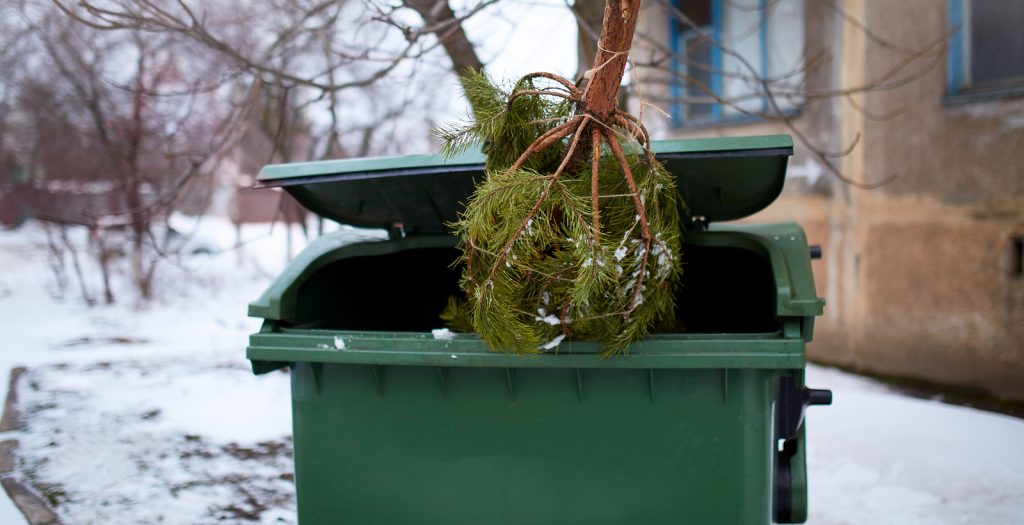
Some municipalities requires citizens to recycle their Christmas trees at a local collection center designated by the town, while others permit tossing them to the curb for garbage collection. It is important to know what you are supposed to do with your Christmas tree before placing in the trashcan and waiting for the waste department to pick it up. Otherwise, your tree may sit out on the curb for a long time.

Here are the Christmas tree disposal instructions for some Indy neighborhoods:

Carmel

In Carmel, free Christmas tree pickup is available curbside on your regular trash days at no additional cost beginning Wednesday, January 1st! All you have to do is remove all of the decorations, cut the tree in half, and place it next to your trash bin! Just be sure not to bag your tree.

Fishers

Here in Fishers, curbside Christmas tree collection is not permitted. Instead, we have a Christmas Tree Recycling program for live trees, which runs through February 1, 2019. Visit the City of Fishers website to see where such drop-off centers are located.

Indianapolis

The Indianapolis Department of Public Works and Indy Parks has set up several Christmas tree drop-off sites throughout the city. They are open from dusk until dawn, December 26th to January 31st. Visit Indy.gov Christmas Tree Disposal webpage to find a designated drop-off location near you. If you wish to make it even easier, you can also toss your tree curbside and trash crews will pick it up as part of regular trash collection at no additional charge to residents.

Noblesville

In Noblesville, simply place your tree with your trash, and Republic Services will pick it up for you! Now isn’t that convenient? Visit the City of Noblesville website to learn specific details for Christmas tree disposal in Hamilton County, Indiana.

Additional Towns

Curbside Collection:

↠ Columbus

↠ Goshen

↠ Greenfield

↠ Greenwood

↠ South Bend

↠ Westfield

Drop-Off Only:

↠ Allen County

↠ Johnson County

↠ South Bend

↠ ​Brownsburg

↠ Plainfield

↠ Shelby County

When You Need Trusted Tree Service

Indianapolis Tree Care 317-783-2518

Call Complete Tree Care at 317-783-2518 for Indianapolis tree service you can trust. We are licensed and insured tree care contractors who serve both residential and commercial properties with a wide range of professional tree care services, including stump removal, lot clearing, storm damage clearance, and more. Request an estimate, today.

Hardiness Zone facts for Trees, Flowers, and Plants

Wikipedia defines a hardiness zone as, “a geographic area defined to encompass a certain range of climatic conditions relevant to plant growth and survival.” If you are planning to remodel your landscaping this year or next, you will need to know some important facts about the Indiana hardiness zone map. Continue reading to get started!

Indianapolis Tree Service 317-783-2518

Indianapolis Tree Service 317-783-2518

Facts About the U.S. Hardiness Zone Map

According to the U.S. Department of Agriculture, “USDA Plant Hardiness Zone Map is the standard by which gardeners and growers can determine which plants are most likely to thrive at a location.” This map is based on the average minimum temperature that occurs during the winter, per year, over the past 30 years. Here are some more pertinent facts!

🍃 The Hardiness Zone Map was developed by the United States Department of Agriculture (USDA).

🍃 It is the most commonly-used reference for growing trees, plants, flowers, crops, and more.

🍃 It defines 13 regional zones according to annual extreme minimum temperature.

🍃 Annual extreme minimum temperature is the lowest average temperature during a period of one year.

🍃 If a tree species is categorized as being hardiness zone 10, it means that it can withstand a minimum temperature of 30.2 to 39 degrees Fahrenheit.

🍃 Various forms of the Hardiness Zone Map have been developed to match other regional climates, such as Canada and other countries.

🍃 The UK Royal Horticultural Society and US Sunset Western Garden Book systems are other forms of hardiness rating classifications.

🍃 You can find the zone for your specific zip code by visiting this USDA.gov webpage and selecting your state.

🍃 The USDA Hardiness Zones for Indiana are 5 and 6, specifically 5b, and 6a, and 6b.

🍃 Common trees that are hardy to Indiana zones include Ash, Cedar, Pine, Hemlock, Elder, Birch, Beech, Cherry, Walnut, Chestnut, Buckeye, Hickory, Locust, Magnolia, Maple, Oak, Poplar, Sweetgum, Sycamore, Willow, and more.

🍃 Warmer zones, such as 9 through 11, are located in the southern parts of the country where you’ll find more tropical-like flora, such as Palm trees.

🍃 Central and northern coastal areas are middle zones, between 6 and 8.

✨ We hope you enjoyed these popular agricultural facts! Be sure to share them with all your gardening friends! If you have questions about tree care, contact a licensed Indianapolis tree service company for expert information and advice you can trust.

Indianapolis Tree Service

Indianapolis Tree Care 317-783-2518

Indianapolis Tree Care 317-783-2518

Call A Complete Tree Care at 317-783-2518 for prompt and professional Indianapolis tree service. We are experienced tree care technicians that can resolve your tree problems, regardless of your projects size or scope. We offer a wide range of tree removal and tree services, for both residential and commercial properties. We even offer free estimates and free tree care advice!

Can I Plant a Tree This Time of Year?

Situations happen all the time that call for tree replacement or transplanting, such as storms, land development, home renovations, and more. In the same position, you may be wondering whether or not you can successfully plant or transfer a tree this time of year.

Continue reading to learn about fall tree planting, including the right times to plant deciduous and evergreen species.

Indianapolis Tree Service 317-783-2518

Indianapolis Tree Service 317-783-2518

Fall Tree Planting

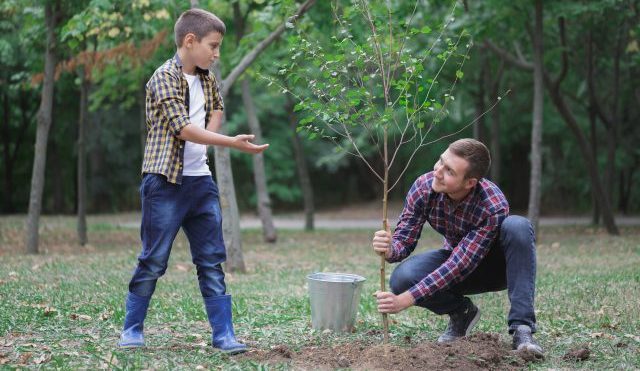
In Indiana, early fall, between late August and early October, are the best times of year to plant a tree. The reason why this time of year is best suited for tree planting has to do with the weather and root systems. Cooler temperatures support new root growth, and render stronger roots in the seasons to come. Furthermore, newly planted trees are more prone to sun scald drought, wildlife tampering, disease, and more; so planting them in the fall when the weather is mild can encourage a higher survival rate.

Exceptions to the Rule

This rule of thumb does not always apply every year since seasonal weather conditions can sometimes be unpredictable or inconsistent in Indiana. It really just depends on the type of fall we are having. So long as the hottest temperatures of summer are past, and the ground isn’t frozen yet, the conditions should be suitable for tree planting.

Also, certain species of trees are better planted at certain times in the fall. For instance, Maple trees should be planted in fall, while species like Birch, Dogwood, and Willow trees require more time to establish root systems, so they are better off planted in the spring. As for fruit trees, these also need to be planted in the spring to avoid winter weather damages.

Who to Trust for Expert Tree Transplanting

Indianapolis Tree Care 317-783-2518

Indianapolis Tree Care 317-783-2518

Call Complete Tree Care at 317-783-2518 for experienced Indianapolis tree transplanting and removal you can trust. We offer a wide range of residential and commercial tree work, including tree removal, trimming, pruning, stump removal, lot clearing, and more. Call 317-783-2518 to request a free estimate, today.

How to Diagnose a Hazardous Tree

Sometimes a tree can be a hazard to its surroundings. In order to know whether or not a tree is dangerous, you will need to have it inspected by a licensed and qualified tree service company. They alone have the knowledge and experience to make an accurate determination of your tree’s condition. Prior to contacting a tree professional, you can make your own assessments by taking a closer look at your questionable tree.

Continue reading to learn the signs of a dangerous tree, and which steps you should take if you suspect yours could be a hazard to people, pets, and property.

Indianapolis Tree Removal 317-783-2518

Possible Causes of Hazardous Trees

Trees that are prone to being a hazard are usually those that have not had a healthy upbringing or have been exposed to certain conditions. There are many external factors that can lead to tree failure, and ultimately, property damage or injury. Common factors include tree disease, pest infestations, nuisance wildlife interference, land development, construction, lawn care, landscaping work, inclement weather (droughts, wind, ice, storms, etc.), vandalism, pollution, and more.

Other times, factors can be internal, involving a tree’s health or makeup, such as co-dominant stems, basal rot, heavy and/or overextended limbs, nutrient or water deficiency, and more. Whatever cause has led to a tree’s decline, the most important aspect is catching the signs on time, before any harm can take place. Once you do catch the signs of a hazardous tree, it is necessary to have it inspected by a licensed Indianapolis tree service contractor for expert evaluation and assistance.

Here are some common signs of a dangerous tree:

? Heavily Leaning in One Direction
? Overgrown Foliage and Limbs
? Obstructive Branches and Limbs
? Substantial Pest Infestation
? Peeling Bark
? Fungal Growth
? Cracked or Split Trunk
? Rotted Trunk
? Rotting Tree Roots

How Can I Tell if My Tree is Dead or Alive?

A dead tree will eventually fall and deteriorate, so it is important to know the signs. For instance, dead trees do not have leaves, and will not sprout new buds on its limbs and branches. Furthermore, they will have dry, brittle bark that snaps in half. And if you snap a twig in half, it will not be green or fleshy yellow on the inside.

What To Do About a Dangerous Tree

Call Complete Tree Care at 317-783-2518 for experienced Indianapolis tree removal service you can trust. We offer a wide range of residential and commercial tree work, including tree removal, trimming, pruning, stump removal, lot clearing, inspections, and more. Call 317-783-2518 to request a free estimate, today.

Indianapolis Tree Care 317-783-2518

Is There a Difference Between Tree Sap and Tree Resin?

One of the most common questions about trees has to do with their secretions. Sap and resin, although similar in thought, are actually quite different from each other. Continue reading to learn some interesting facts about tree resin and tree sap, including the qualities that make them so different.

Indianapolis Tree Service 317-783-2518

Tree Sap

All trees produce a “sap”, to some degree. Tree sap is a translucent, thin, watery, slightly amber colored substance (just a tad little thinner than standard honey) that develops within the xylem and phloem cells of the trees. These cells are responsible for transporting water and nutrients throughout the tree, and carry water, hormones, sugar, and other minerals elements.

As a result, sap contains sugar and water, and extracted from trees using buckets and spiles. Maple syrup comes from the sap of Maple trees. A tree uses sap in two ways; they either: 1) pull sap from the water in the soil, transport it up through its trunk, and send it out through its leaf pores (stomata), or 2) sap flows down off of the leaves, towards the roots and other parts of the tree, because it contains the vital sugar (food) the tree synthesized in its leaves during photosynthesis.

Tree Resin

Also known as “pitch”, tree resin is thicker, tackier, and darker than tree sap. Deciduous trees do not make resin; it is only produced by trees that belong to the Pinaceae family, such as pine, fir, and cedar. Resin forms in the outer cells of the trees, also known as the inner and outer bark. Outer bark is also known as the phloem. You can make a cut into a resin-producing tree, and see the resin ooze out of the bark. The resin is meant to work like a scab; it closes up the wound and protects it from outer elements while it heals.

Resin is sticky and clear, and composed differently than tree sap. It is composed of compounds secreted by or deposited in the tree and sometimes contains high levels of chemical properties. For this reason, it is used for a variety of commercial and industrial applications; maple syrup is not one of them. Resin is used to manufacture commodities like ink, lacquer, varnish, jewelry perfumes, and many other commercial products.

Indianapolis Tree Service

Call Complete Tree Care at 317-783-2518 for Indianapolis tree service you can trust. We are highly trained and experienced tree care technicians that offer commercial and residential tree services at affordable prices. Request an estimate or advice anytime. Call 317-783-2518 to learn more about tree care in Indianapolis, IN today.

Indianapolis Tree Care 317-783-2518

Frequently Asked Questions About Tree Removal

Indianapolis Tree Removal 317-783-2518

Indianapolis Tree Removal 317-783-2518

Can I Remove A Live Tree?

Trees that are dead are often removed to prevent accidents and property damage. However, living trees are removed all the time, and for many reasons. Some common reasons why a live tree might need to be removed involve convenience and necessity. For instance, lots must be cleared for new construction (homes, buildings, barns, pools, etc.), large trees must be removed if they interfere with power lines and telephone poles, and more.

Is My Tree Dangerous?

A weakened tree can be a hazard on your property. There are many circumstances that can weaken a tree, including improper tree care, pest infestation, nutrient or water deficiency, co-dominant stems, trunk and basal rot, overextended limbs, limbs with too much weight, wildlife interference, weather damage, construction damage, and more.

Once weakened, a tree loses strength and stability and experiences a reduction in function and performance, which makes it unpredictable, and therefore, unsafe to be around. To identify a tree hazard, there are specific signs to look for. Below are the most evident signs of a dangerous tree. These include over-leaning trunk, large or multiple dead branches, fallen branches, hole in the trunk, leaf loss, rotted root system, and pest infestations.

How Can I Tell if My Tree is Dead or Alive?

A dead tree will eventually fall and deteriorate, so it is important to know the signs. For instance, dead trees do not have leaves, and will not sprout new buds on its limbs and branches. Furthermore, they will have dry, brittle bark that snaps in half. And if you snap a twig in half, it will not be green or fleshy yellow on the inside.

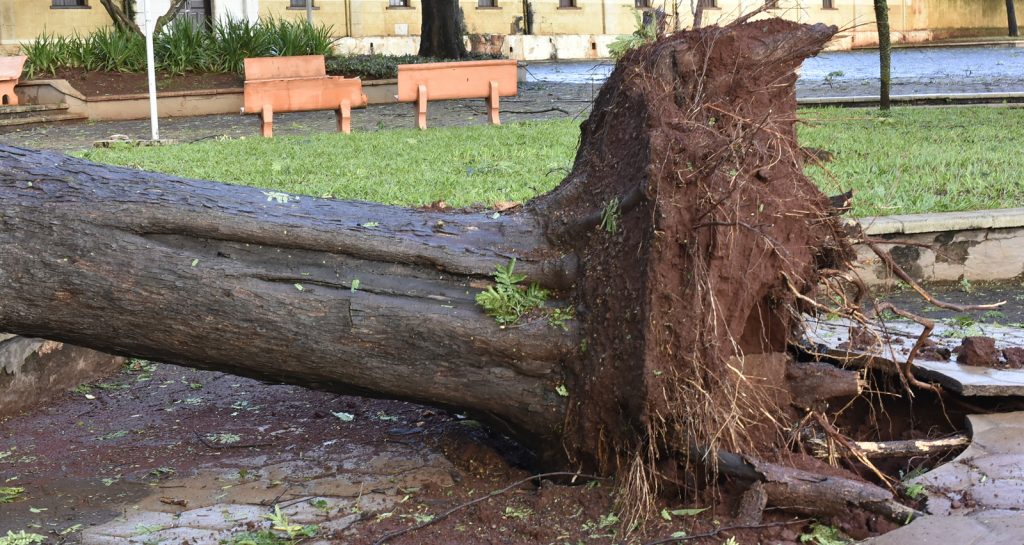
Can an Uprooted Tree Be Planted Again?

When a tree is uprooted from the ground, a number of roots are snapped in half, making them extremely vulnerable. So in many cases, it does not survive. This is because the root system is too damaged to fully recover. This is especially true for large or mature trees. But sometimes, a tree can be saved by replanting it, but only under certain circumstances. And even if the tree can be revived by putting it back into the ground, it could experience problems such as transplant shock. This is why post-replanting care is so vital for the survival of a tree that has been uprooted by inclement weather.

Can I Plant a Tree in Summer?

If you really want to plant a tree in the summer, you will be taking on a risk since heat and dry soil put a lot of stress on a young sapling that is trying to establish a root system. It may last through the summer, but it will have trouble coming out of dormancy for the following season. The reason why the rule of thumb is to plant trees in spring or fall is because trees are in their dormant stage during these times. During dormancy, trees require less water, sunlight, and nutrients. This means their growth is significantly decelerated, making it easier for healthy root development.

How Do I Get Rid of a Tree Stump?

You have two main options for getting rid of a tree stump. These are stump removal and stump grinding. The option you choose depends on your personal preference, budget, and landscaping. Stump removal is the process of pulling the entire stump and most of the root ball out of the ground, entirely. Stump grinding involves using a heavy piece of machinery to chip away and shave down the stump to ground level. From there, the stump can be covered with grass or plants, and a leftover hole from stump removal can be filled with dirt and covered with sod.

How Do I Remove a Tree?

Call Complete Tree Care at 317-783-2518 for experienced Indianapolis tree removal you can trust. We offer a wide range of residential and commercial tree work, including tree removal, trimming, pruning, stump removal, lot clearing, and more. Get started by requesting a free estimate, today.

Indianapolis Tree Care 317-783-2518

Indianapolis Tree Care 317-783-2518

Top 4 Signs That Indicate a Tree is Dead

Now that spring is here, you should be seeing some changes in your landscape. Grass is getting greener, plants are starting to bud, and wildlife activity is increasing every day. With a little more time, all the trees and flowers will soon be blooming and producing as they do every year. However, some trees do not make it through the winter, which is why now it is a good time to check your trees and ensure they are still alive and healthy.

If your trees are currently in decline, there may be a chance to restore them with proper tree care and treatment. If your trees are dead, they may need to be removed or trimmed back. A licensed tree service specialist can make this determination for you after just one visit.

In the meantime, continue reading to learn the top 4 common signs that indicate a tree could be dead.

Dead Tree Removal 317-783-2518

Dead Tree Removal 317-783-2518

Bare Branches

One of the most obvious signs that a tree is not healthy is branch loss. If you notice that a tree on your property looks bare this spring because it failed to produce a full canopy of foliage, it could be having health issues or close to dying. In the case that half of the tree’s canopy is full and bright and the other half is bare, it could be a sign that the tree is sick with a disease. Common tree diseases that cause foliage loss include Oak Wilt, Fire Blight, Emerald Ash Borer, Root Rot, and Crown Rot. If a large tree is diseased and loses half its canopy, it could become a safety hazard since the imbalance of foliage weight can cause the tree to fall.

Trunk Damage

After you take a look at the tree’s canopy, you need to inspect the trunk. A tree’s trunk will provide good evidence if it becomes ill or malnourished. Look closely for vertical cracks. This kind of tree damage is a good indication that it is not doing well in terms of health. It may still be alive, but something is interfering with its health and structural integrity. Tree trunks should have bark that protects the inner parts of the trunk responsible for nutrient and water absorption and distribution. If you see patches on the trunk that are completely smooth and bark-free (almost like finished wood), whether large or small, it is a bad sign.

Fungal Growth

The appearance of mushrooms and similar fungal growths are a common sign of a dead tree, or tree decline. To look for fungal growth, pay close attention to trunk and the base of the tree. This is where it likes to grow since it is usually darker and cooler. If you see fungus on the trunk, it is likely that the trunk is rotted on the inside and the tree is dead.

Root Damage

Root damage can be hard to spot on a relatively young or newly planted tree. However, you can sometimes spot root damage yourself. For instance, look to see if the tree is leaning to one particular side. This is an indication that the root system is damaged or weakened. You can also look for epicormic shoots. These look like misplaced branches growing out of the bottom of a tree trunk. These two signs often indicate that a tree has damaged roots. If the tree roots are very large and stick out of the ground, look for damages done by lawn mowers, construction, wildlife, and pests. To confirm accurately if a tree has root damage, you would need to contact a licensed Indianapolis tree service for a professional inspection and assessment.

Still Unsure if Your Tree is Dead or Alive?

? Perform a Scratch Test!

Pull a few twigs from the tree and scratch a portion of the bark off. If the inner tissue is moist and green, the tree is alive. If it is brittle and dry, the tree is dead. Be sure to test three or four branches to be sure.

Indianapolis Tree Service

Call A Complete Tree Care at 317-783-2518 for prompt and professional Indianapolis tree service. We are experienced tree care technicians that can resolve your tree problems, regardless of your projects size or scope. We offer a wide range of tree removal and tree services, for both residential and commercial properties. We even offer free estimates and free tree care advice!

Indianapolis Tree Care 317-783-2518

Indianapolis Tree Care 317-783-2518

Is it a Good Time to Trim My Tree?

There are certainly ideal times of the year for tree trimming. And if you want healthy results and long-lasting trees, you must do it right. Professionals recommend adhering to the industry best practices suggested by the American National Standards Institute. These standards are known as ANSI A300, and they are highly effective guidelines for tree pruning.

Continue reading to learn when you should trim your trees, and if now is a good time to get started.

Indianapolis Tree Care 317-783-2518

Indianapolis Tree Care 317-783-2518

Prune Trees Before Spring

It is important to prune trees because it promotes new healthy growth in the spring. For this reason, the best time to prune trees are when they are dormant, which is during the winter. During dormancy, trees are not growing, but they are still alive. This, coupled with the fact that winter time poses less of a risk of pest and wildlife interference, is why tree pruning is most effective in the winter season.

This does not mean that trees should be pruned when temperatures are below freezing and snow is covering the ground. Instead, you want to wait until the coldest parts of winter are over. Therefore, NOW is the perfect time to prune your landscaping trees!

Do Not Miss Your Window of Opportunity

If you wait until spring or summer to trim trees, it can put them at a higher risk of pest infestations, bark damages, unhealed tree wounds, and overall tree decline that can last the rest of the tree’s life. If you wait until fall to trim trees, it can lead to slower healing, which can put them at risk of being infected by airborne decay-causing fungi and/or insects.

Exceptions to the Rule

Flowering trees that bloom in the mid-to-late summer may get by with spring-time pruning since their blossoms appear so late in the year. However, trees that blossom their flowers in the spring should always be pruned as soon as their flowers disappear. That usually occurs between the late summer and early fall. It is best to always discuss your tree pruning needs and options with a trusted Indianapolis tree service expert for professional advice.

Indianapolis Tree Pruning

Call Complete Tree Care at 317-783-2518 for experienced Indianapolis tree trimming and pruning you can trust. We offer a wide range of residential and commercial tree work, including tree removal, trimming, pruning, stump removal, lot clearing, and more. Call 317-783-2518 to request a free estimate, today.

Indianapolis Tree Care 317-783-2518

Indianapolis Tree Care 317-783-2518