There is something undeniably majestic about a large, established tree. It provides shade on sweltering summer days, adds character to your landscape, and often serves as a silent witness to generations of memories. However, there comes a time in every homeowner’s life when the stewardship of such a giant means making the difficult decision to let it go.
Removing a big tree is rarely a snap judgment. It is a significant undertaking that requires careful thought, balancing safety concerns against environmental benefits and emotional attachment. Whether you are worried about a leaning trunk after a storm or simply concerned about the long-term health of an aging oak, understanding the full scope of the process is essential.
This guide explores the critical factors you must weigh before scheduling that final cut, ensuring your decision is safe, legal, and environmentally responsible.
Assessing the Tree’s Health and Safety
The most common driver for removal is safety. A tree that was once a sanctuary can quickly become a liability if its structural integrity is compromised. While some issues are obvious—like a tree that has crashed onto a fence—others are subtle, requiring a keen eye to spot before they cause damage.
Recognizing Signs of Disease and Decay
Trees often hide their ailments well, but there are telltale signs that suggest internal struggles. According to the International Society of Arboriculture (ISA), you should look for longitudinal cracks along the stem or major branches. While small fissures might be superficial, deep cracks can indicate internal separation or wood decay.
Keep an eye out for fungal growth, such as conks or mushrooms, appearing at the base of the trunk. These are not merely cosmetic issues; they are often the external evidence of significant internal rot. If you see cavities or large hollows, or if you notice sap leaking through the bark, the tree’s structural strength may be failing. Additionally, dead branches (often called “widowmakers”) hanging in the canopy pose an immediate threat to anyone walking below.
Identifying Potential Hazards
Beyond the tree’s biological health, its physical position matters. A healthy tree can still be hazardous if it interferes with critical infrastructure. Look up and look down. Is the canopy entangled with high-voltage power lines? If so, this is a dangerous situation that usually requires utility company intervention rather than a standard DIY approach.
Below ground, root defects can be just as dangerous as falling branches. Heaving soil at the base of the trunk or roots that are visibly decaying can lead to whole-tree failure during a windstorm. If a tree has a significant lean—especially if that lean has developed recently or exposed roots are lifting on the opposite side—it requires immediate professional assessment.
Evaluating the Environmental Impact
Removing a big tree does more than change the look of your yard; it alters the local micro-ecosystem. Mature trees are engines of biodiversity, and their removal should be calculated carefully against the ecological cost.
The Ecosystem Role
Mature trees are vital for temperature regulation, cooling your home and yard through shade and evapotranspiration. They also manage stormwater runoff, preventing soil erosion and reducing the load on municipal drainage systems. Furthermore, they are often habitats for birds, squirrels, and pollinators.
Before removal, consider the timing. Wildlife protection guidelines, such as those from the U.S. Fish and Wildlife Service, suggest avoiding tree removal during peak breeding and nesting seasons to protect vulnerable species like bats and migratory birds.
For example, some bat species roost in cracks and crevices of trees during the summer months. A pre-work inspection by an experienced tree contractor can help ensure you aren’t disrupting an active nest or roost.
Replanting and Sustainability
If removal is necessary, you can mitigate the loss through strategic replanting. The goal isn’t just to replace wood with wood, but to restore the ecological function you are losing. Consider planting native species that are well-suited to your local climate and soil conditions. These trees generally require less water and fertilizer once established and provide superior habitat for local wildlife compared to exotic ornamental trees.
Contact Us for Professional Tree Removal in Indianapolis 📞
Legal and Permitting Requirements
One of the most overlooked aspects of tree removal is the legal landscape. You might own the land, but that doesn’t always mean you have carte blanche to remove everything on it.
Navigating Local Regulations
Many municipalities have strict ordinances regarding tree preservation, especially for trees of a certain diameter or species. In Indianapolis, for example, the Department of Public Works notes that a flora permit is required for removing any tree located in the city’s right-of-way (typically the area between the sidewalk and the street).
Private property rules can also be complex. Some areas protect “heritage” or “specimen” trees, while others may require a permit if you are removing trees near wetlands or water bodies. Ignoring these rules can lead to significant fines.
The Importance of Compliance
Compliance isn’t just about avoiding a ticket; it’s about community responsibility. These regulations exist to maintain the urban tree canopy, which benefits everyone by reducing heat islands and improving air quality.
Always check with your local urban forestry department or city hall before beginning work. If you hire a professional service, they can often handle the permit application process for you, ensuring that all local codes are followed.
Hiring a Professional Tree Service
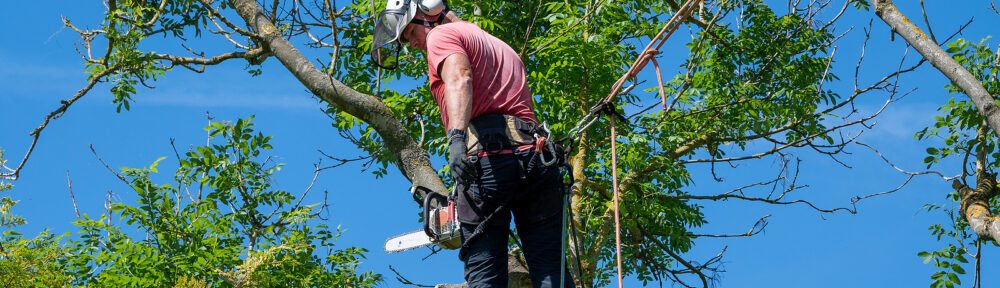
Removing a large tree is not a Saturday afternoon DIY project. It is heavy, dangerous work that often involves working at heights with powerful machinery. Hiring a professional is an investment in safety and peace of mind.
Why You Need a Pro
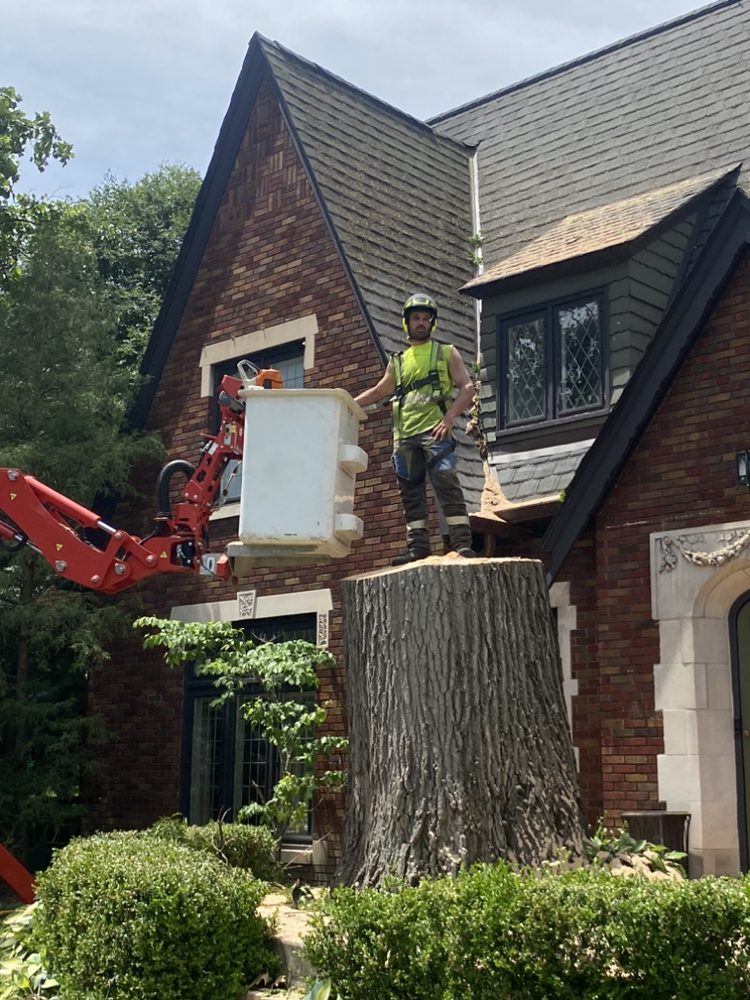
Professional tree care contractors bring expertise and equipment that the average homeowner simply doesn’t possess. They are trained to predict how a tree will fall, how to rig heavy limbs safely, and how to work around obstacles like houses and fences.
Crucially, reputable companies carry liability insurance and workers’ compensation. If a branch falls on your neighbor’s roof or a worker is injured on your property, you want to be sure that the company’s insurance—not your homeowner’s policy—covers the damages.
Finding the Right Company
Don’t just hire the first company that pops up on your search engine feed. When vetting potential hires:
- Ask for proof of insurance: Do not take their word for it; ask to see the certificate.
- Check references: Ask for examples of similar work they have done in your area.
- Get multiple estimates: This helps you gauge the fair market price for the job.
- Verify their approach: Ask how they plan to access the tree. Will they use a crane? Will they use spikes? (Note: Spikes should only be used if the tree is being fully removed, as they damage living tissue).
Cost Considerations
The price of removing a big tree varies significantly based on several factors. According to recent data from Angi, the cost typically ranges from $200 for small trees to over $2,000 for large, complex removals, with an average around $750. However, for massive trees or difficult jobs, costs can go higher.
Breaking Down the Pricing
Several variables will influence your final quote:
- Size: Height and trunk diameter are the primary cost drivers. Taller trees often require cranes and larger crews.
- Location: Accessibility matters. A tree in the middle of an open front yard is cheaper to remove than one squeezed between a garage and a power line in a fenced backyard.
- Condition: Interestingly, a dead or rotting tree can sometimes be more expensive to remove than a healthy one because it is unstable and dangerous to climb, requiring specialized equipment to dismantle safely.
- Emergency Work: If a tree has fallen on your house after a storm, emergency tree services will come at a premium.
Additional Costs
Be aware of “add-on” services. Basic removal quotes often include cutting the tree down but may not include stump grinding or hauling away the debris. Stump removal alone can add $100 to $150 per stump. Always clarify exactly what is included in the estimate so there are no surprises when the bill arrives.
Making the Right Call
Deciding to remove a big tree is a balancing act between safety, legality, and environmental stewardship. It requires looking beyond the immediate problem to consider the long-term impact on your property and your neighborhood. By assessing the risks accurately, understanding the regulations, and hiring qualified professionals, you can ensure the process is handled smoothly and responsibly.
If you are located in the Indianapolis area and need expert advice on the health of your trees or professional removal services, don’t leave it to chance. Contact Us Today for a consultation. We can help you navigate the permits, assess the hazards, and handle the heavy lifting safely.
Related Post: The Dangers of DIY: Why Large Tree Removal Requires a Pro