What You Need to Learn About Tree Stress

Did you know that trees can feel stressed out? It’s true! Trees can experience stress, discomfort, and irritation as a result of external factors and elements. Just like humans, trees can both feel stressed and be treated to relieve stress. In order to determine if your landscaping trees are distressed, look for the common signs and symptoms, including crown dieback, foliage loss, rotting bark, fungal growth, pest infestations, leave discoloration, and more.

Continue reading to learn what causes a tree to experience stress, how to identify a stressed tree, and your options for treatment.

Indianapolis Tree Service Company
Indianapolis Tree Service Company 317-783-2518

What Stresses a Tree Out?

The most common time for tree stress to occur is during extremely hot and dry times of the year, particularly in the months of July and August.  Once a tree is stressed, it is weakened, making it more vulnerable to pest infestations, wildlife interference, disease, and more. Once you know your tree is under duress, it is important to treat the root cause as soon as possible. To do this accurately, you will need to hire an experienced tree care specialist for professional tree service and assistance. In the meantime, learn the different signs and symptoms of a stressed tree and keep a close eye on your lawn next spring!

Signs and Symptoms of a Tree in Distress

Leaf discoloration is a common sign of tree stress. Often times, leaves will begin to discolor and even grow smaller when a tree is experiencing pressure or anxiety. Leaves can also appear chewed, curled, discolored, permeated, and thin. It is very common for a tree to drop its leaves under stress as well.

Crown and tip dieback is another common symptom of a stressed tree. Not only will the canopy or crown of the tree begin to diminish and thin, the tips of branches will also thin and lose leaves. This will make the tree bald at its canopy’s tips and top.

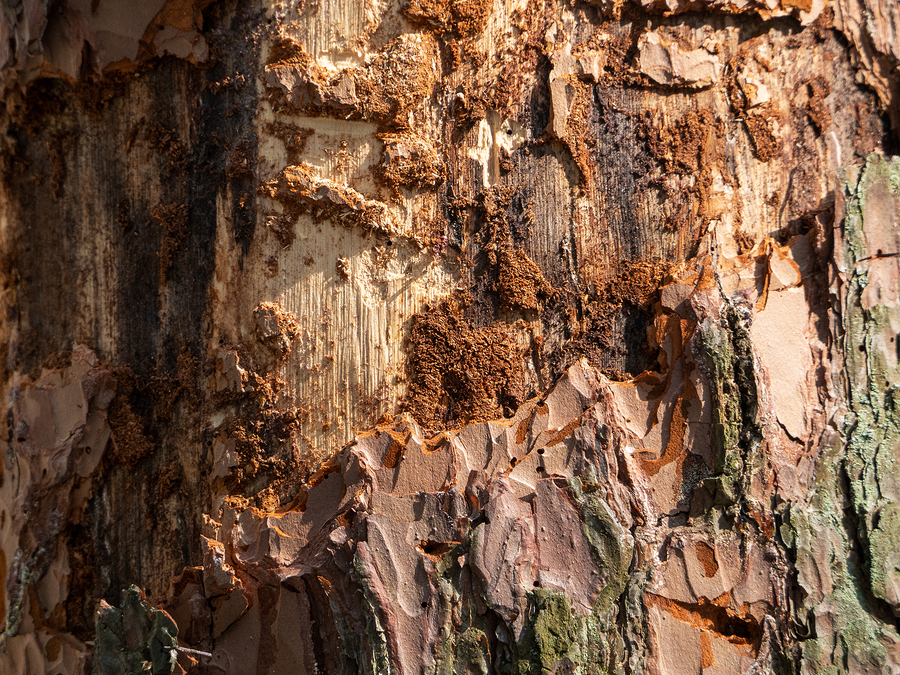
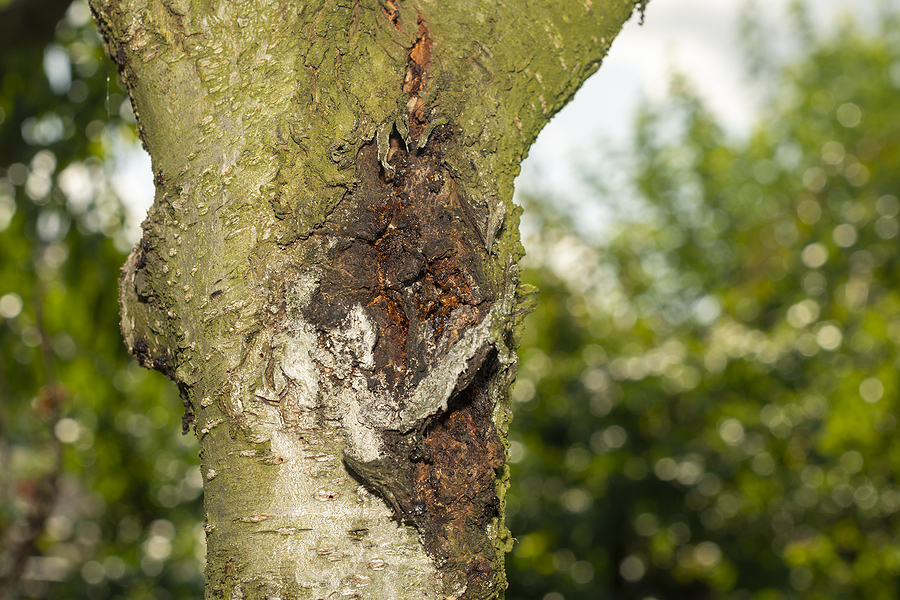
Rotten bark is a red flag for tree stress. The bark can begin to rot in certain areas, or create rotted out cavities within the trunk of the tree. Rotten wood should be sprayed annually to prevent disease, pests, and exponential rotting. Once healthy again, the tree will start to grow new bark in place of the rotten bark.

Soil-borne mushrooms and fungal growth is another common sign that a tree is not healthy. When mushrooms grow on the trunk, it is not so alarming. But when they are growing in the soil surrounding the base of the tree, it could be an indication of root rot. This calls for serious and professional tree service.

Indianapolis Tree Service Professionals Who Can Help With Stressed Trees

Call Complete Tree Care at 317-783-2518 for professional Indianapolis Indiana tree service you can trust. We serve all of Central Indiana with a wide range of skilled tree removal and tree care services, for both residential and commercial properties. Whether you need a single tree removed, or simply require routine tree service, like trimming or pruning, we can deliver prompt and professional service at a fair price. Request a free estimate, today.
Indianapolis Tree Care 317-783-2518

When is the Recommended Time of Year to Transplant a Tree?

There are many reasons why you might need to relocate a tree on your property. Some of the more common reasons include home conversions or additions, landscaping remodeling, or a tree simply becoming too large for the space it’s in. If you need a tree transplanted, it is important to learn what you need to know for successful results. One of the most important factors in tree transplanting is timing. Continue reading to learn how to get your timing right when it comes time to transplant your tree.

Indianapolis Tree Service 317-783-2518

Tree Transplantation Basics

The science behind tree transplantation is quite complex. But not to worry; as a property owner, all you need to be familiar with are the basics. As mentioned, transplanting a tree at the right time of year is one of those fundamentals. The general focus for transplanting a tree at the right time of year is dormancy. For this reason, late winter and early spring are the perfect times to get the job done.

Transplant Trees in Fall, Late Winter or Early Spring While Still Dormant

Transplanting in Fall – Transplant your tree in the fall, but only after all the leaves have dropped for the season.

Transplanting in Spring – Transplanting your tree in spring is safe, but be sure to do so before they begin to show new bud formation.

Transplanting in Winter – Transplanting trees in winter is possible, so long as the ground is not too frozen.

Post-Transplanting Tree Care

Transplanting a tree on your property during the right time of the year is just the beginning. You need to also provide post-care for your transplanted trees and shrubs. Focus on watering, including a deep water every 2 weeks or so. Also be sure to consider mulching and tree staking, but avoid fertilizing. Wait at least one year before fertilizing a tree that was transplanted to a new location.

Rely on Indianapolis Tree Care You Can Trust

Call Complete Tree Care at 317-783-2518 for prompt and professional Indianapolis tree service you can trust. We are experienced tree care technicians that can resolve your tree problems, regardless of your projects size or scope. We offer a wide range of tree removal and tree services, for both residential and commercial properties. We even offer free estimates and free tree care advice!

Indianapolis Tree Care 317-783-2518

Should I Remove a Leaning Tree?

According to the International Association of Certified Home Inspectors (InterNACHI), any tree that is leaning more than 15 degrees as a result of wind force or damaged root system should be taken down. Now, the question is, “to what degree is your tree leaning?” Well, in order to find out what degree your tree is leaning, you will need a professional tree inspection.

Continue below to learn more about the dangers of leaning trees, including how to spot the signs of a dangerous tree, as well as, who to call for professional Indianapolis tree service you can trust.

Indianapolis Tree Service 317-783-2518

Common Signs That Indicate a Tree Might Fall Soon

Now, if your landscaping tree is small, or very young, you might not need to worry about any particularly dangerous conditions. Small, young trees are not as heavy or dense as older, more mature trees. For this reason, they tend to do less damage to any of the structural surroundings, as well as people or pets walking by. However, if your tree is moderate sized or larger, it can be a potential hazard to its surroundings, including people and pets.

There are several signs you can look for when doing your own inspection of your leaning landscape tree. Mostly, you want to look for damage. The top signs of a tree that’s preparing to fall soon include holes in the trunk, deep cuts or cracks in the trunk, dead or dropping branches, tight branch growth, root rot, and of course, visible leaning. If you are not sure if your trees leaning or not, you can always take a picture of it, wait one year, and then take another to compare. Or, you can enlist the services of a local Indianapolis tree care company for expert diagnostics you can trust.

How to Get Started on a Professional Tree Safety Inspection

In order to get the safest and most accurate answers to your leaning tree questions, you will need to hire a professional Indianapolis tree service company for a tree safety inspection. Professional companies are licensed and certified to perform residential and commercial tree work in the state, but they are also highly trained to identify and predict tree health problems. They retain the proper equipment to accurately diagnose whether or not your landscaping tree is a danger. Not all leaning trees need to be removed, as mentioned before. If your tree is not leaning more than 50°, it can likely be stabilized through tree cabling and bracing or tree staking.

Where to Get an Affordable Indianapolis Tree Safety Inspection

Call Complete Tree Care at 317-783-2518 for comprehensive tree inspection services by a certified arborist in Indianapolis, Indiana and surrounding locations. We serve all of Central Indiana with a wide range of skilled tree removal and tree care services, for both residential and commercial properties. Whether you need a single tree removed, or simply require routine tree service, like trimming or pruning, we can deliver prompt and professional service at a fair price. Request a free estimate, today.
Indianapolis Tree Care 317-783-2518

What You Can Do About Tree Bark Damages

Trees are inspirational and aesthetically pleasing. They are admired most for their gift of shade, bountiful harvests, beautiful scenery, and their part in nature’s course.  This is why it is troubling to see trees whose bark has been damaged by harsh weather, vandalism, lawn mowers, wild animals, and more. Tree bark is important for a trees health because it protects the conductive wood and tissue beneath.

Continue reading to learn how to repair damaged tree bark, and who to call for accurate and professional tree care advice.

Indianapolis Tree Care Service 317-783-2518

Tree Bark Damage Solutions

When tree bark is damaged, the underlying tissue and wood can be exposed and detrimental to the tree.  It is crucial to act fast before the tree becomes even more vulnerable, leading to extensive bark damage and overall harm.  In short, when you see damaged tree bark, a few things will be in order right away. These include:

Removing the Loose Tree Bark
Facilitate Comprehensive Cultural Care
Provide Adequate Irrigation
Provide Adequate Fertilization
Possible Bridge Grafting
Preventing Further Damages and Threats

To remove loose tree bark, a person will need sterile and sharp pruning shears or a knife. Look for any bark that is loose, flapping, or bruised. This is the bark that will need to be cut off.  It is important for a person to not damage the wood that is still alive and intact. Cutting right at the line of decay is the best point of reference for safe tree bark removal.

Providing adequate water and fertilizer is crucial in order to reduce the potential for tree disease and vulnerability. It also promotes strong and sturdy tree growth and tissue repair. When tree bark is wounded or exposed, various wood-eating and burrowing pests can invade the tree. Emerald Ash Borers, Wood Beetles, and more can harm a tree’s health and damage it even further.

How to Evaluate Your Tree Care Needs in Indianapolis

Call Complete Tree Care at 317-783-2518 to speak with a friendly and knowledgeable Indianapolis tree care professional, and request a free estimate for a tree inspection, today. We have a state-certified arborist available to inspect the health and needs of your landscaping trees. Furthermore, we are a family owned and operated tree care company, which means we understand the value of a dollar, which is why we offer our tree services at fair and reasonable rates. So, get started today with a free quote!

Indianapolis Tree Care 317-783-2518

Facts About Stem Girdling Tree Roots

When you imagine the roots of a tree, you likely envision a sprawling root system that expands both above and below ground, and out away from the tree. You would not, however, picture a tree’s root system wrapping itself around the base of the tree. But this odd root behavior is actually possible; a phenomenon known as tree root stem girdling.

Continue reading to learn more about stem girdling tree roots, including what causes them and what you can do about it.

Indianapolis Indiana Tree Service
Indianapolis Indiana Tree Service 317-783-2518

Trees With Girdling Roots

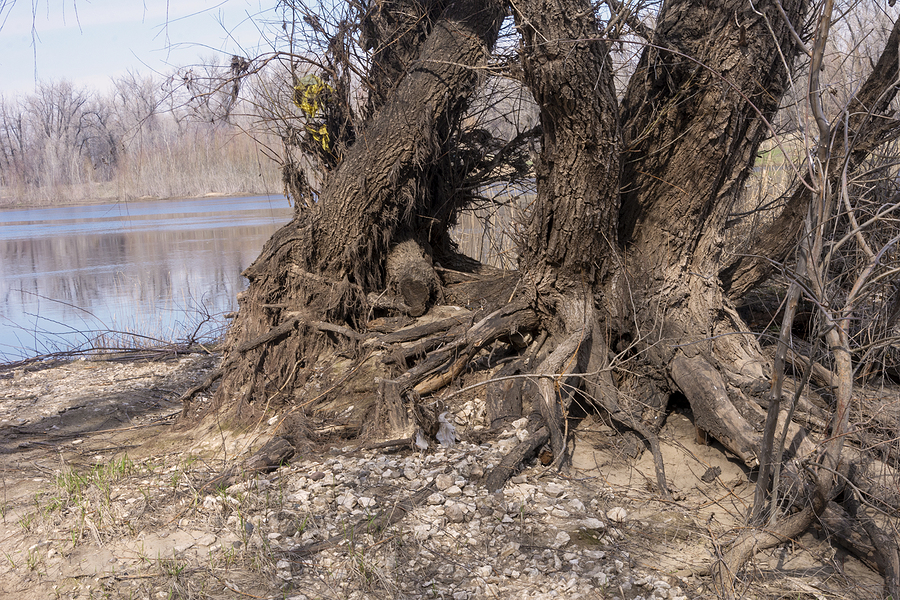
When the roots of a tree grow in a way that circles around the trunk, it is called stem girdling. This defunct growth can occur above ground and beneath the soil. Roots will appear as if they are strangling the tree, causing it to suffocate; and this is not far from reality. Stem girdling tree roots can in fact reduce or block a tree’s ability to get properly distribute nutrients and water to the rest of the tree.

Common Causes

Stem girdling can happen to any type of tree, but here in Indiana, the most common trees to experience root girdling are maple and linden trees. There are many reasons why tree roots grow in a girdling fashion, but the most common reason has to do with the manner in which the tree was planted. Improper tree planting can cause a long list of problems, including poor tree health. A common side effect of poor tree health is root girdling.

Common improper tree planting practices that can pose a girdling risk include making the hole too small or too deep, or not loosening up container roots prior to planting. Even post-planting improper tree care can lead to stem girdling roots, such as applying too much mulch against the trunk of the tree.

Detecting Tree Root Girdling

It is easy to detect tree root girdling when the roots are above ground, but when they are below, you will have to learn the signs in order to spot them. The most tell-tale signs of below-ground tree root girdling include thinning canopies, bare branches, dead branches, and leaf discoloration. Also, if the trunk looks like it goes directly into the ground, without any curved taper at the base, it could be indicative of girdling.

Solutions For Trees With Girdled Roots

The only way to solve a stem girdling tree root problem is to dig up the base of the tree, chisel down the roots, and apply the best practices for tree care. Talk to a local Indianapolis tree service expert for tree care advice and assistance you can trust.

Professional Indianapolis Indiana Tree Services You Can Count On

Call Complete Tree Care at 317-783-2518 for prompt and professional Indianapolis tree services you can afford. We are experienced tree care technicians that can resolve your tree problems, regardless of your projects size or scope. We offer a wide range of tree removal and tree services, for both residential and commercial properties. We even offer free estimates and free tree care advice!

Indianapolis Tree Care 317-783-2518

What You Need to Know About Tree Boring Insects

The frustrating thing about wood-boring insects is that you can’t always see the scope of damage they cause to your trees. Just below the bark of your favorite landscaping tress might lie an infestation of tree-boring beetles that you never knew were there! There are various species of wood-boring insects and beetles, some of which are a minor threat, while others are highly invasive and detrimental to trees. It is important to stay on top of routine tree care in order to catch a small infestation problem early on, before your tree can get sick, or worse, die.

Continue reading to learn more about wood-boring beetles, and which ones are known to target trees.

Indianapolis Tree Care Service 317-783-2518

Wood Borers and Tree Health

Although wasps and moths are known to target wood, and therefore, trees, beetles take the cake for the most invasive and damaging. The most common wood-boring beetle is aptly named the Emerald Ash Borer, and targets mostly Ash trees, but can also infest other trees as well. Other common wood-borers include:

? Emerald Ash Borer (EAB)
?
Redheaded Ash Borer
?
Red Oak Borer
?
Cottonwood Borer
? Locust Borer

Adult beetles bury below the bark, deep into the tree’s inner tissue, and then lay their eggs. They are also clever enough to use existing cracks in the bark and inner tissue when wood is too hard to bore. This is another reason why you want to take good care of your trees! Once the eggs are laid, the damage to the tree instantly becomes exponential since the larvae feeds on the bark. They tunnel all through the inner tissue, eating more and growing fatter.

As a result, the tree’s structured is weakened, causing the tree to continually lose its ability to properly distribute water and nutrients, thus causing it to enter a state of decline. In fact, an infested tree will often times have sawdust and debris at its base, providing prime evidence of borer larvae and beetles. Small L-shaped or D-shaped exit holes are another common sign of a wood-borer infestation.

Signs of a Tree-Borer Infestation

It is important to catch a beetle infestation early on through professional, routine tree service. Because their existence can go unnoticed for so long, most cases of wood-borer infestations are not treatable. However, in early cases of infestation, treatment is possible so long as it is done immediately. There are several ways to identify a wood-borer infestation in trees and other foliage. Their movements and behaviors leave clues behind that can only suggest a wood-boring beetle problem. Here are the common signs and symptoms of a tree infected and overcome with borer colonies:

  • Splitting Bark
  • Canopy Thinning and Die-Back
  • Foliage Bareness
  • Vertical Fissures on Bark
  • Callous Tissue Formation
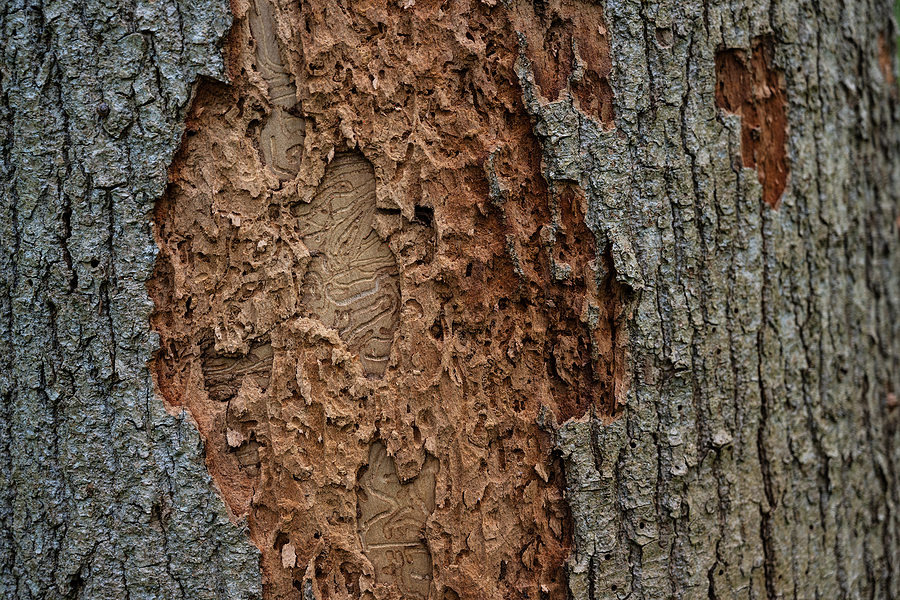
  • Exposed Galleries under Bark Split
  • Serpentine-Shaped Larvae Feeding Galleries in Bark
  • Frass Accumulation (Mix of Saw Dust and Excrement)
  • D-Shaped Holes in Trunk
  • Increase Woodpecker Activity
  • Sprout Growth from Roots and Trunk
  • Larger-than-Normal Leaves

Indianapolis Indiana Tree Service You Can Afford

Call Complete Tree Care at 317-783-2518 for prompt and professional Indianapolis tree service you can trust. We are experienced tree care technicians that can resolve your tree problems, regardless of your projects size or scope. We offer a wide range of tree removal and tree services, for both residential and commercial properties. We even offer free estimates and free tree care advice!

Indianapolis Tree Care 317-783-2518

Indiana Hardy Trees That Can Be Planted in Full Sun Locations

Finding a tree that you like to look at is just one aspect of choosing the right tree for your lot. There are plenty more factors to consider if you want your tree to grow strong and last a long time. One such factor that seems to hold homeowners back from reaching their landscaping goals is overexposure to sun. Especially for new construction homes, there can be many areas of a lot that do not have any sources of shade.

In this case, planting a tree that is not suitable to full-sun exposure can end in failure. After all, how frustrating would it be to spend several hundred dollars on a new tree, only for it to decline the following season? Even a 30 or 90-day guarantee from your landscaping retailer won’t help since often times, damage shows up the season after too much sun exposure.

Continue reading to learn which species of tree are both hardy to Indiana, and suitable for a full-sun location in your yard!

Indianapolis Tree Service 317-783-2518

Drought-Tolerant, Full-Sun Tree Species

The USDA Hardiness Zones for Indiana are 5 and 6, specifically 5b, and 6a, and 6b. Common trees that are hardy to Indiana zones include Ash, Cedar, Pine, Hemlock, Elder, Birch, Beech, Cherry, Walnut, Chestnut, Buckeye, Hickory, Locust, Magnolia, Maple, Oak, Poplar, Sweetgum, Sycamore, Willow, and more. However, the most common tree species that do very well in Indiana climates, plus can thrive in full-sun or drought-tolerant conditions include:

    American Sweet Gum
    Autumn Blaze Red Maple Tree
    Ash Tree
    Ginkgo Trees
    Quaking Aspen Tree
    Yoshino Cherry Tree
    Kwanzan Cherry Tree
    Autumn Cherry Tree
    Okame Cherry Tree
    Blue Point Juniper
    Sugar Maple Tree
    Emperor One Japanese Maple
    Robinson Crabapple Tree
    Amberglow Redwood Tree
    Red Dogwood Tree
    White Dogwood
    White Kousa Dogwood Tree
    Butterfly Bush
    Dura Heat River Birch
    Eastern Redbud
    Redbud Trees
    Superior Hybrid Poplar Tree
    American Sycamore Tree
    Blue Moon Reblooming

Tree Planting Tips

When you plant a new tree, you can expect it to require a little more attention than the rest of your landscaping trees. That is because the root system is still being introduced into the soil and acclimating to its new surroundings. Here are some tips that will put you on a path of success:

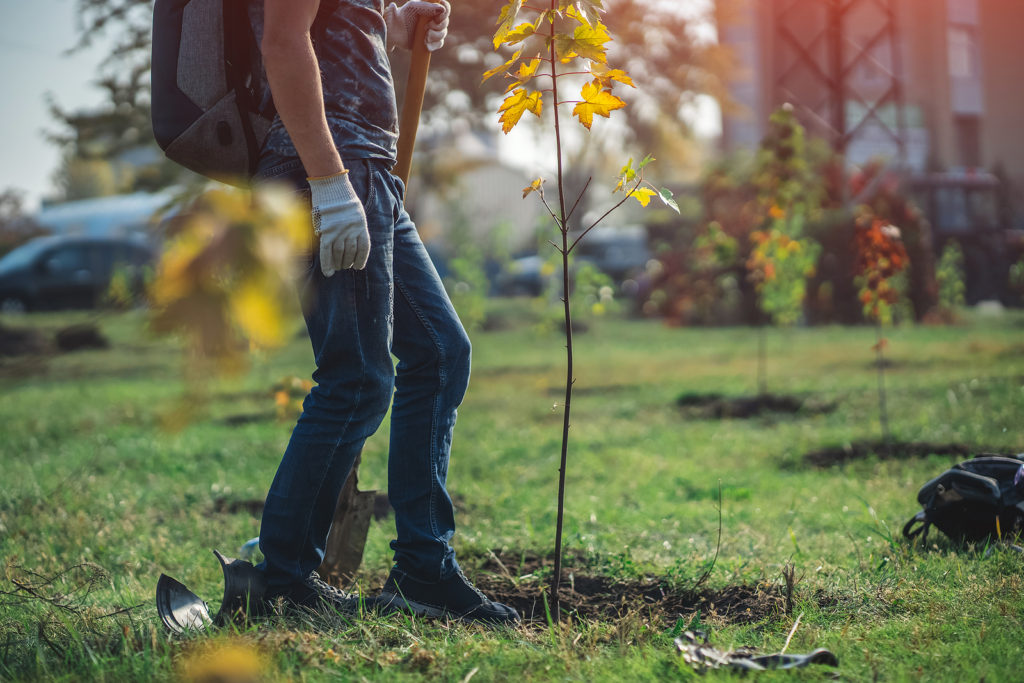
For the first several months, you must check the soil every day, and water your transplanted tree every few days. Just be sure to not over-water; two or three times a week is a great starting off point. If it rains, check the top few inches of soil around the base of the tree for moisture first.

Laying mulch around the base of your trees is a highly effective method of supporting healthy growth and prolonging their life. Although you do not need to re-mulch every week, it is important to check on your mulch beds every day to ensure they are still doing their job.

It is important to inspect the branches of your transplanted tree every day to assess its pruning needs. Pruning should take place right after you transplant your tree. No more than 25% of a tree’s foliage should be removed in a year. Be sure to have a licensed tree service company perform your annual pruning needs to ensure that the proper ANSI tree pruning standards are applied.

Inspect your tree every day to ensure it is growing as it should. If it is not, fertilizer may be an option. Fertilizer should only be applied AFTER the first year of tree transplanting. Stressed trees should never be fertilized.

It is important to minimize the level of danger that can be imposed onto your new tree. This includes taking into consideration lawn mowers, sprinkler systems, nuisance wildlife, pets, herbicides, pesticides, and more.

Get Trusted Tree Care Advice and Tree Service in Indianapolis

Call Complete Tree Care at 317-783-2518 for experienced tree service in Indianapolis and throughout Central Indiana. We offer a wide range of residential and commercial tree services, including tree removal, tree trimming, stump grinding, stump removal, lot clearing, and more. If you want professional and efficient service you can trust, Complete Tree Care is the right call!

Indianapolis Tree Care 317-783-2518

How to Spot the Signs of Tree Stress

Just like ourselves, trees can experience different levels of stress and discomfort as a result of exterior factors and influences. And just like us, trees can be treated to relief symptoms and underlying causes. To determine if your landscaping trees are under duress, look for the tell-tale signs, including crown die back, foliage loss, rotting bark, fungal growth, pest infestations, leave discoloration, and more.

Continue reading to learn what causes a tree to experience stress, how to identify a stressed tree, and your options for treatment.

Indianapolis Tree Service 317-783-2518

Common Causes for Tree Stress

The most common time for tree stress to occur is during extremely hot and dry times of the year, particularly in the months of July and August.  Once a tree is stressed, it is weakened, making it more vulnerable to pest infestations, wildlife interference, disease, and more. When you know your tree is under duress, it is important to treat the underlying cause as soon as possible. To do this accurately, you will need to hire an experienced tree care specialist for professional tree service and assistance. In the meantime, learn the different signs and symptoms of a stressed tree and keep a close eye on your lawn next spring!

Signs and Symptoms of a Stressed Tree:

Leaf discoloration is a common sign of tree stress. Often times, leaves will begin to discolor and even grow smaller when a tree is experiencing pressure or anxiety. Leaves can also appear chewed, curled, discolored, permeated, and thin. It is very common for a tree to drop its leaves under stress as well.

Crown and tip die back is another common symptom of a stressed tree. Not only will the canopy or crown of the tree begin to diminish and thin, the tips of branches will also thin and lose leaves. This will make the tree bald at its canopy’s tips and top.

Rotten bark is a red flag for tree stress. The bark can begin to rot in certain areas, or create rotted out cavities within the trunk of the tree. Rotten wood should be sprayed annually to prevent disease, pests, and exponential rotting. Once healthy again, the tree will start to grow new bark in place of the rotten bark.

Soil-borne mushrooms and fungal growth is another common sign that a tree is not healthy. When mushrooms grow on the trunk, it is not so alarming. But when they are growing in the soil surrounding the base of the tree, it could be an indication of root rot. This calls for serious and professional tree service.

Indianapolis Tree Service for Residential and Commercial Clientele

Call Complete Tree Care at 317-783-2518 for prompt and professional Indianapolis tree services you can afford. We are experienced tree care technicians that can resolve your tree problems, regardless of your projects size or scope. We offer a wide range of tree removal and tree services, for both residential and commercial properties. We even offer free estimates and free tree care advice!

Indianapolis Tree Care 317-783-2518

Facts About Over-Watering and Under-Watering Trees

Unlike our own species, trees do have voices they can use to tell us they need more water or have had enough. For this reason, it is important to be the voice of trees, and learn what signs they exhibit to let us know their watering needs. Continue reading to learn the common signs of over-watered and under-watered trees, and what you can do to help a suffering tree.

Indianapolis Tree Service
Indianapolis Tree Service 317-783-2518

Tree Watering Basics

The general rule of thumb for water trees varies depending on the age, species, condition, and location of a tree. For instance, newly-planted and transplanted trees should be watered regularly enough so that the top 12 inches of soil remains moist to the touch. This averages out to around 4 to 8 gallons per week. Mature trees needn’t regular watering, and instead, should just be properly mulched and watered during dry spells. For sick trees, watering should be increased, or as instructed by a licensed arborist.

Since tree watering needs vary on species, location, climate, season, and more, there is really no way of establishing a universal rule of thumb. However, you can learn how to spot the signs of over-watering and under-watering a tree. This knowledge can help you take better care of your trees, and respond to nutritional issues early on, before they can turn fatal for your trees.

Signs of an Over-Watered Tree:

☙ The base of the tree is always wet to the touch. Although the mulch bed surrounding the base of the tree should retain moisture at all times, there should also be a period of the day when the mulch is dry on top. If the mulch is always wet, even when other mulch beds and tree bases are dry, it could mean it has been given too much water.

☙ Blooms do not grow to size. If the blooms, flowers, or fruits on your tree do not fully-bloom, and instead wither and drop, it could mean that they are getting too much water. If the blooms turn light green or yellow in color, it could also mean over-watering.

☙ Green leaves are fragile and break off. If your tree sprouts foliage that is green, yet break off easily to the touch, it could be there is an over-watering issue. If you notice a pile of green leaves around the base of your tree, it may signify the same issue.

Signs of an Under-Watered Tree:

The signs of an under-watered tree are quite similar to those of an over-watered tree. So be sure you look closely to see the difference. Common signs include:

☙ Leaf Wilting or Curling
☙ Browning Edges or Tips on Leaves
☙ Thin or Thinning Canopy
☙ Under-Sized Leaves
☙ Off-Color Leaves
☙ Premature Fall Color Changing

QUICK TIP: Can you stick a screwdriver into the ground below your tree? If you cannot do so easily or at all, your tree definitely needs more water!

Indianapolis Tree Service Professionals Who Can Help

Call Complete Tree Care at 317-783-2518 for professional Indianapolis tree service you can trust. We serve all of Central Indiana with a wide range of skilled tree removal and tree care services, for both residential and commercial properties. Whether you need a single tree removed, or simply require routine tree service, like trimming or pruning, we can deliver prompt and professional service at a fair price. Request a free estimate, today.
Indianapolis Tree Care 317-783-2518

Get Spring Tree Service Deals in Indianapolis at Complete Tree Care

Are you in need of some professional spring tree care in the surrounding Indianapolis areas, but not sure if you can get service right now? Well, the good news is that you are in the right place!

Tree removal and tree care services are easy to schedule and always affordable when you call the experts at Complete Tree Care! Continue below to learn what we can do for your landscaping trees this season and the next, as well as, which deals we are currently offering and how to get in touch with one of our expert tree care technicians for a free quote.

Indianapolis Tree Service
Indianapolis Tree Service 317-783-2518

Superior Tree Service You Can Trust

Complete Tree Care provides professional tree services in Indianapolis, Indiana and all its nearby counties and districts. We are professional tree removal and service technicians with more than 30 years of experience in the industry! The best part is that they offer a wide variety of tree service coupons, discounts, monthly specials, deals, and more!  No matter what tree service you require, you can be sure Complete Tree Care is offering a matching coupon or special just for you!

Our team of highly trained and qualified tree service specialists provide residential and commercial tree work in Indiana. We can facilitate any tree service task required, including, tree disease treatment, tree transplanting, tree removal, stump grinding, pruning, shaping, trimming, fertilizing, tree bark repair, and more. We retain state-of-the-art equipment and extensive industry training to professionally care, service, and removal all varieties of tree.

Need Emergency Tree Removal for a Dead Tree?

Dead trees are usually easy to spot, and commonly cabled and braced since they exponentially lose their strength and root stability. See our blog, “Top 4 Signs That Indicate a Tree is Dead” to learn how to decipher a dead tree from a live one. Accordingly, dying or diseased trees pose the same threat. These trees are often cabled to prevent them from decaying and falling. See our blog, “Common Questions and Answers About Tree Diseases” to learn more. In other cases, trees that are in areas with very bad soil conditions or poor water drainage can be very unstable, and potentially fall over in rough winds or storms. For this reason, they are also good candidates for cabling and bracing.

Get in Touch With Us Today!

Contact Complete Tree Care today at 317-783-2518 for free estimates, information, or DIY advice regarding residential and commercial tree work in Indianapolis, Indiana. We also offer emergency tree removal services, lot clearing, Emerald Ash Borer treatment, and much more.  There is no tree job our knowledgeable and skilled tree service specialists can’t tackle. We can even provide our services all throughout Indianapolis, and its outer counties! Call 317-783-2518 today and get a free estimate or information about Indianapolis tree care services and more.

Indianapolis Tree Care 317-783-2518