The Difference Between Angiosperms and Gymnosperms

There are millions of plant species, all of which are seed-bearing and come from some form of rudimentary ovule. However, there are only two types of seed-bearing plants that all species can be categorized as depending on their seed attributes: angiosperm or gymnosperm.

Continue reading to learn the difference between the two and how it may affect your landscaping season to season.

Indianapolis Tree Service 317-783-2518

Angiosperms

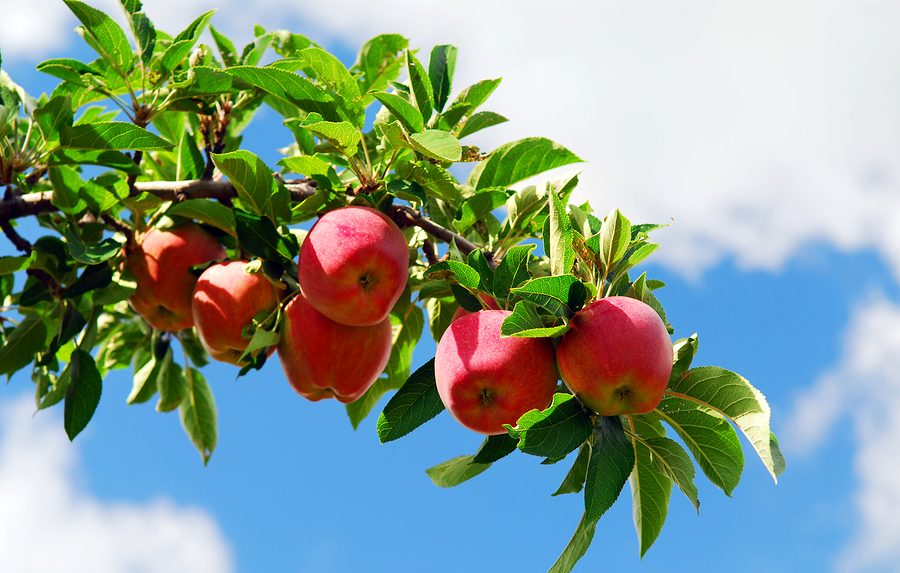
Angiosperms are any type of flowering plant whose seeds (ovules) are enclosed in an ovary (usually a fruit). In more understandable language, angiosperms are common gardening plants that bloom flowers from a hidden seed that is typically enclosed inside a fruit that develops from carpels. With an estimated 250,000 to 400,000 species of angiosperms on the planet, they are often considered the dominant plant-life on Earth.

Common Examples of Angiosperms:

? Lilies
? Orchids
? Roses
? Sunflowers
? Oak Trees
? Maple Trees
? Fruit-Bearing Trees

Angiosperm Attributes:

? Softwood
? Non- Perennial
? Triploid Tissue
? Flat Leaves
? Unisexual or Bisexual
? Cotyledons Present in Monocots and Dicots

Gymnosperms

In contrast to angiosperms, gymnosperms are a vascular plant whose seeds are not enclosed inside an ovary. Gymnosperms do not produce flowers or fruit, and instead have exposed, or naked, seeds on its surface. Also in contrast to angiosperms, the number of gymnosperm species are significantly lower, with less than 1,000 on the planet. are haploid

Common Examples of Gymnosperms:

? Pine Trees
? Conifers
? Cycads
? Spruce Trees
? Firs

Gymnosperm Attributes:

? Hardwood
? Perennial
? Haploid Tissue
? Scale or Needle-Like Leaves
? Absence of Cotyledons

Indianapolis Tree Care Near You

Call Complete Tree Care at 317-783-2518 for prompt and professional Indianapolis tree service you can afford. We are experienced tree care technicians that can resolve your tree problems, regardless of your projects size or scope. We offer a wide range of tree removal and tree services, for both residential and commercial properties. We even offer free estimates and free tree care advice!

Indianapolis Tree Care 317-783-2518

Can I Trim Dead Branches Off a Tree in Summer?

Tree pruning and trimming are two separate types of tree services, but both equally critical to a tree’s overall well-being. We know that tree pruning should be done at certain times of the year in order to protect trees from pest infestations, disease, and wildlife tampering. However, homeowners continuously have questions and concerns about trimming trees throughout each season. This is especially true for trees that have some unsightly dead limbs or branches. You may be quite tempted to just snip these dead areas off, but at the same time, concerned that it can negatively impact the health of your tree.

If you are wondering whether or not it is safe to trim dead branches off of your landscaping trees in the summer, continue reading to learn what you need to know.

Indianapolis Tree Service 317-783-2518

Tree Pruning Guidelines

When it comes to pruning trees, it is critical to adhere to the ANSI A300 tree pruning standards to ensure tree protection and growth. These are the industry-accepted best practices that should be used by all who prune trees and shrubs. To carry out such standards in tree pruning, one needs to be trained and experienced.

Otherwise, one wrong cut can cause a tree to eventually fall ill and die. For these reasons, tree pruning should only be executed by a licensed tree service contractor who retains the proper knowledge and equipment. See our blog, “Can I Prune My Trees Yet?” to learn some important tips and facts about tree pruning.

Dead Limb and Branch Removal

Tree pruning should be implemented when trees are in their dormant, non-growing state. Generally, dormancy begins in late fall and lasts until early spring, making this timeline the best rule of thumb to follow. However, there are exceptions when it comes to dead branches and limbs.

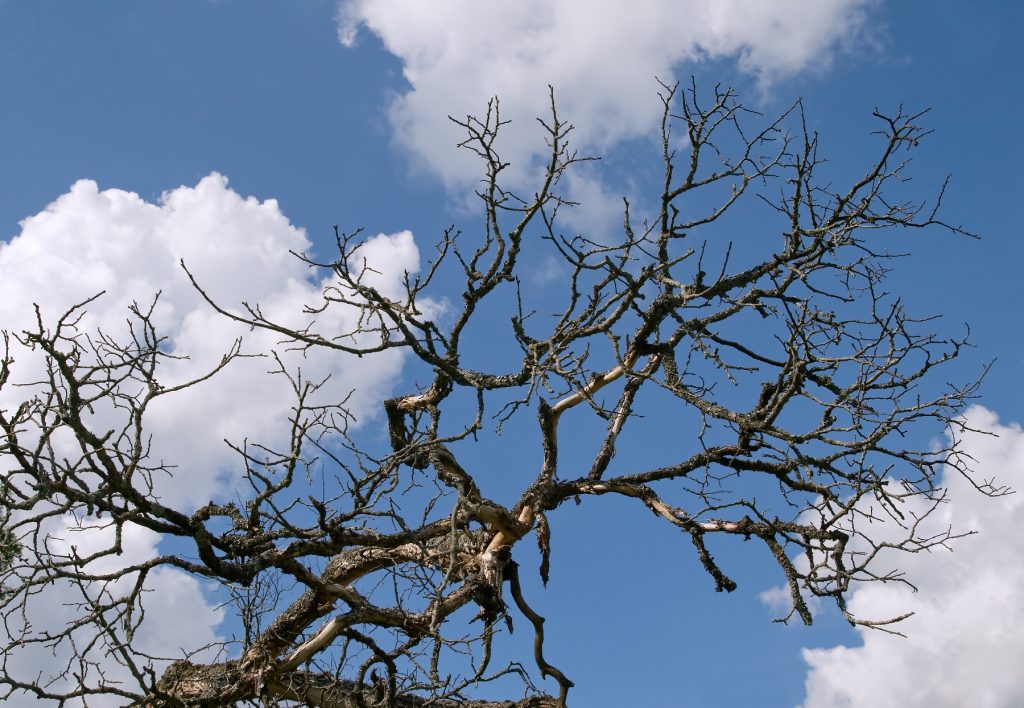
You can remove these at any time of the year without causing any potential harm or damage to your trees so long as you wait until the foliage has fully bloomed in the canopy. Once a tree has emerged all of its leaves, you can remove dead branches and bunches as soon as you see them to prevent insects and decayed organisms from entering the tree.

Another important reminder is to avoid trimming or pruning trees in periods of hot or dry spells, and extreme cold. If you have maple and dogwood trees, you may want to hold off on trimming away dead branches until they are in dormancy. This is due to the fact that these species of tree emit sap during these times, which can be messy. See our article, “How to Clean Tree Sap Off Stuff” if this ever becomes an issue for you.

Get Professional Tree Service in Indianapolis

Call Complete Tree Care at 317-783-2518 for prompt and professional Indianapolis tree service you can trust. We are experienced tree care technicians that can resolve your tree problems, regardless of your projects size or scope. We offer a wide range of tree removal and tree services, for both residential and commercial properties. We even offer free estimates and free tree care advice!

Indianapolis Tree Care 317-783-2518

3 Reasons Why You Should Never Perform Tree Work Yourself

If you have a tree on your property that requires some work, whether a thorough trimming and pruning, or an entire removal, it is best to leave the task to a licensed and insured tree service professional. Not only can you put yourself and others in danger, you can jeopardize your property, and waste precious time and money.

Continue reading to learn the top three reasons why you should never attempt to perform any type of invasive tree work on your own, as well as, how to find safe and affordable tree service near you.

Indianapolis Tree Service 317-783-2518

➀ Extension Ladder Hazards

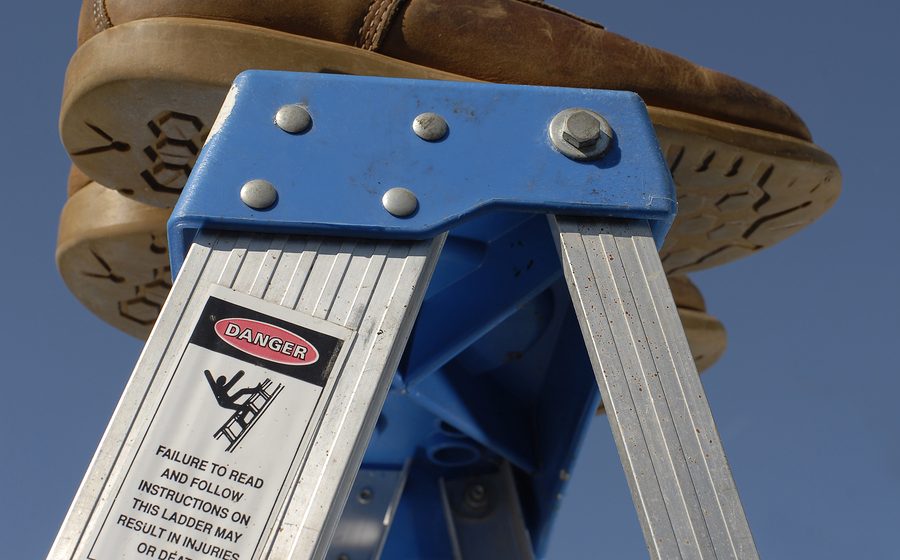
Invasive tree work, like tree removal and tree pruning, generally require the use of extension ladders. This is especially true for trees that are taller than 5 feet. The problem with extension ladders is that they can be very dangerous if not used properly. Furthermore, using such ladders requires experience, which generally involves learning safety lessons the hard way. Not only can you fall from great heights when using an extension ladder, you can also pin and pinch fingers, and even damage surrounding property like cars, play sets, and sheds.

➁ Insufficient Resources

You might have access to a chainsaw and extension ladder, but this does not equip you for major tree work. The processes of tree pruning and tree removal require specialized machines, tools, materials, and most importantly, knowledge of industry best practices. Not only are you unequipped to get the job done accurately and safely, you do not retain the proper knowledge and experience in the tree service industry. This lack of resources makes DIY tree work an incredibly dangerous feat.

➂ Lack of Tree Knowledge

Although your safety and the safety of those around you are the most important priorities to consider when talking yourself out of DIY tree work, the trees and surrounding landscape itself are other factors to keep in mind. Doing tree work on your own can put your trees at serious risk of health problems due to your lack of tree biology and arborist proficiency. If you prune your trees incorrectly, they can fall ill and even die.

Where to Get Trusted Indianapolis Tree Work

Call Complete Tree Care at 317-783-2518 for Indianapolis tree service you can trust. We are highly trained and experienced tree care technicians that offer commercial and residential tree services at affordable prices. Request an estimate or advice anytime. Call 317-783-2518 to learn more about tree care in Indianapolis, today.

Indianapolis Tree Care 317-783-2518

What are the Layers of a Tree Trunk?

One of the most interesting facts about tree trunks is that they have 5 different layers! Continue reading to learn more about these 5 tree trunk layer, including what they do!

Indianapolis Tree Service 317-783-2518
Parts of a Tree Trunk

? Tree Trunks

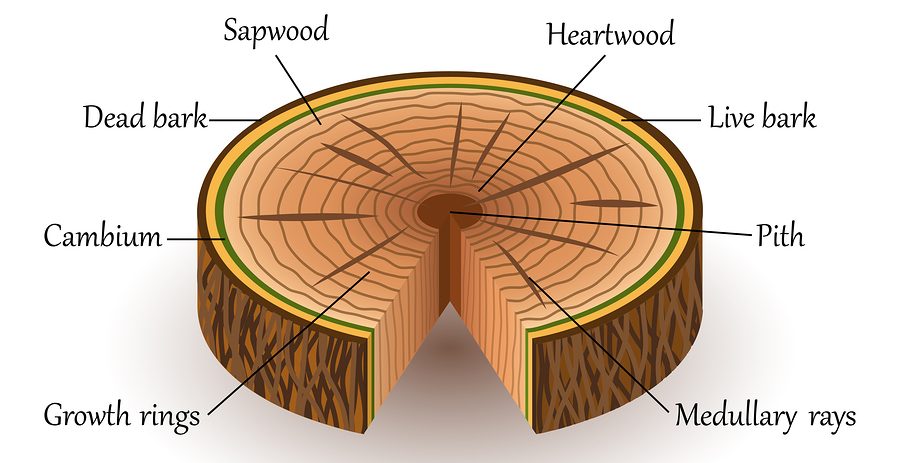
As mentioned, tree trunks have 5 separate layers to them. They are the outer bark, inner bark (phloem), the cambium cell layer, sapwood, and heartwood. Each layer has their very own purpose, but overall, the trunk’s primary job is to protect and support the tree. Look below to review each layer and what they do.

❶ Outer Bark

Like a shield, a trunk’s outer bark is there to protect the tree from its outside surroundings, including inclement weather, wildlife, pests, and more. It also controls moisture, by both preventing excess moisture in the rain and snow, and retaining sufficient moisture levels during dry seasons. It also provides insulation in cold weather and protects against sunburn in the summer.

❷ Phloem (Inner Bark)

The phloem, or inner layer of bark, is where food and nutrients are passed through the tree. This layer has a very important job, but a very short lifespan. It eventually dies, turns to cork, and becomes part of the outer layer of bark!

❸ Cambium Cell Layer

The cambium cell layer is interesting because it is the part of the trunk that grows. Each year, this layer produces more bark and wood as a reaction to the hormones being passed down from the leaves along the food pipeline. These hormones are called auxins, and they are very important because they stimulate new cell growth!

❹ Sapwood

Sapwood is new wood, and serves an important role as the tree’s water pipeline, delivering water to the entire tree. And as new sapwood is created, the inner cells lose their vigor and turn to heartwood.

❺ Heartwood

Heartwood is the most inner part of the trunk. It plays an important role in balance, stability, and security for a tree. Technically, heartwood is dead, but it does not atrophy or decay (unless the outer layers are jeopardized). It is made up of a hollow, needle-like cellulose fibers that are joined together by a glue-like chemical called lignin.  

Additional Parts of a Tree Trunk:

The pith is made of soft, spongy parenchyma cells, which serve the purpose of storing and transporting nutrients throughout the tree. The medullary rays are cellular structures found in only some tree species., and appear perpendicular to the growth rings. The growth rings, also known as Dendrochronology, appear one at a time, once per year, darker in the fall and lighter in the spring and summer.

Get Professional Tree Care in Indianapolis

Call Complete Tree Care at 317-783-2518 for professional Indianapolis tree service you can trust. We serve all of Central Indiana with a wide range of skilled tree removal and tree care services, for both residential and commercial properties. Whether you need a single tree removed, or simply require routine tree service, like trimming or pruning, we can deliver prompt and professional service at a fair price. Request a free estimate, today.
Indianapolis Tree Care 317-783-2518

How to Treat Fungus and Algae Growth on Trees

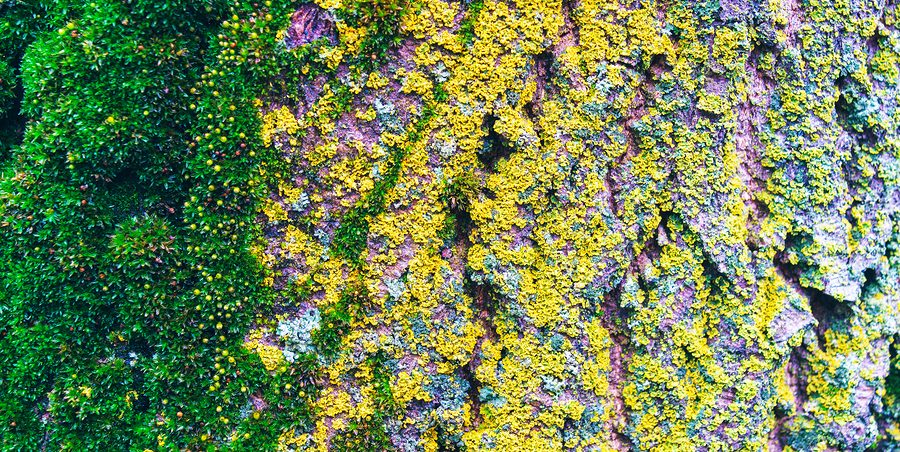
Following extended periods of rain, it is common to find strange, blob-like growths on your tree bark. These growths can develop overnight, and appear in an array of colors and textures; most often, furry and filmy, in colors like greens, whites, or yellows. So what are these odd globules on your beloved landscaping trees?

Well, they are called tree lichens, and they are basically harmless to the tree and surrounding environment, however, they are generally deemed unattractive, which is why you may be interested in removing and preventing them from coming back. Continue reading to learn more about tree lichens, including causes, treatments, and prevention strategies.

Indianapolis Tree Service 317-783-2518

Tree Lichens

Tree lichens are unique because they are actually two organisms in one: fungus and algae. These two organisms form a symbiotic, or mutually-beneficial, relationship. The fungus collects moisture, which the algae needs to survive, while the algae uses photosynthesis to convert the sun’s energy into food, which the fungus need to survive. Why are they harmless? Because their rhizines, which are similar to roots, are not capable of penetrating the bark deep enough to disrupt the tree’s health.

How to Remove It

To get rid of tree lichens, you will need a soft bristled brush, mild dish soap, clean water, and gloves. Use gentle pressure to scrub the lichens off of the bark, first dipping the brush into your batch of clean water and mild dish soap. Allow the bark to dry completely. You may also have your trees sprayed with a copper-sulfate solution or a lime sulfur solution. However, these methods only destroy fungus, so they should only be applied in late spring when weather is warmer.

How to Prevent It

The best method for preventing tree lichens is to implement environmental modifications that make your trees a less suitable target for fungus and algae growth. Tree lichens growth in cool, moist settings; so change these conditions and tree lichens will be a thing of the past. Furthermore, you can thin the canopy of your trees to incorporation more sunlight. Also, if you have an automated sprinkler system, be sure that it is not reaching your tree bark.

Indianapolis Tree Service You Can Trust

Call Complete Tree Care at 317-783-2518 for experienced tree service in Indianapolis and throughout Central Indiana. We offer a wide range of residential and commercial tree services, including tree removal, tree trimming, stump grinding, stump removal, lot clearing, and more. If you want professional and efficient service you can trust, Complete Tree Care is the right call!

Can I Replant a Fallen Tree?

Tree roots are more than meets the eye. You see, the root system of a tree expands broadly within the ground space below its mound. This is referred to as a trees “critical root zone”, and can span as wide as 10 feet or more around the circumference of the tree. However, regardless of how extensive they spread out, tree roots do not grow very deep into the ground, which means that trees are susceptible to being easily uprooted by severe storms and heavy winds.

When a tree is displaced from the ground, several, if not all roots, are broken in half, rendering them tremendously weak and damaged. Not only does this circumstance put the roots under serious stress, the crown and trunk are also affected. Furthermore, when exposed outside of the soil, they are all prone to serious damages that can ultimately kill the tree.

So what does this mean for you? Well, if you have a tree that has been uprooted from the ground, continue reading to learn if it can be saved or not, and if so, where to begin.

Indianapolis Tree Service 317-783-2518

Facts About Uprooted Trees

In many cases, an uprooted tree does not survive. This is because the root system is too damaged to fully recover. This is especially true for large or mature trees. But sometimes, a tree can be saved by replanting it, but only under certain circumstances. And even if the tree can be revived by putting it back into the ground, it could experience problems such as transplant shock. This is why post-replanting care is so vital for the survival of a tree that has been uprooted by inclement weather.

Large Tree Uprooting

Large trees are not common survivors of uprooting. Their root systems are extensive and mature, which provides the tree with water and nutrients. When massive severing occurs, they are not strong enough to supply the tree with adequate amounts of food and water, causing the tree to die. But also, replanting a large tree is not easy to do since their extensive root systems also anchor the tree down, providing stability. Once the roots are severed, this stability is difficult to recreate. It is also challenging to get a large tree to stand straight to begin with.

Small Tree Uprooting

Smaller trees have a higher chance at survival because their roots systems are not as extensive. A large portion of their root system stays intact after being uprooted, and the smaller size reduces the amount of exterior damage to the trunk and branches caused by the actual fall. When uprooted, they suffer the same amount of stress as large trees, but can then be replanted in most cases. It requires professional tree service to replant uprooted trees properly. This is because they have the tools, training, and knowledge to complete the job safely and in a convenient time frame.

How to Care for an Uprooted Tree

Once a tree has been replanted, the after-care portion is critical to its survival. This includes regular tree pruning, sufficient watering, and adding fertilizer after one year of new-growth. Trust your local tree care technician for professional tree service so that your replanted trees do not suffer from transplant shock or any other issues.

Licensed Tree Service Near You

Call Complete Tree Care at 317-783-2518 for Indianapolis tree service you can trust. We are highly trained and experienced tree care technicians that offer commercial and residential tree services at affordable prices. As professional tree specialists, we know precisely how to manage each and every tree service job requested of us. We only use quality equipment to carry out our tree care services and never neglect safety. And if you have a tree emergency after regular business hours, we offer two separate after-hours phone lines!

Indianapolis Tree Care 317-783-2518

Why Choose Complete Tree Care

There are many reasons why Hoosiers all across the city choose us for professional tree work. Continue reading to learn why we are a leading tree service provider here in Indianapolis, and why you too should choose us for your year-round tree service needs.

Indianapolis Tree Service 317-783-2518

? We Offer a Wide Range of Services

Our expert tree care contractors provide a wide range of residential and commercial tree services, including tree trimming, tree pruning, thinning, crown reduction, crown raising, storm damage clearance, stump removal, and much more.  Aside from routine service, we also provide major tree work, such as tree removal, dead-wooding, lot clearing, and more. On top of a wide selection of tree care services, we also offer free estimates and advice, and cleanup is included on every job!  We also provide flexible scheduling, custom agendas, and unparalleled customer support!

? We are State Certified Arborists

Here at Complete Tree Care, we have a state certified arborist on staff to help with any questions concerning your trees. Our professional arborist is licensed in tree disease diagnosis, as well as, tree insect identification, for all Indiana tree species. Not only are our certified arborists capable of answering your tree care questions, they are more than happy to do so! Simply call our office during regular business hours for assistance and service for questions about tree problems.

? Our Credentials are Real

Hiring a professional tree service with the amount of experience we have is crucial to getting the job done correctly. Experience is the first credential to look for when searching for a tree service company. Check out some more of our credentials, below!

✅ INDIANA STATE CERTIFIED ARBORISTS #IN-3208A

✅ TREE DISEASE DIAGNOSIS (LICENSE #21263)

✅ TREE PEST IDENTIFICATION (LICENSE #21263)

✅ LICENSED AND INSURED

✅ OVER 30 YEARS OF EXPERIENCE

✅ BETTER BUSINESS BUREAU MEMBERS

✅ ANGIE’S LIST APPROVED

How to Get Started With a Free Quote

Call Complete Tree Care at 317-783-2518 to speak with a friendly and knowledgeable contractor, and request a free estimate for Indianapolis tree service, today. As a family owned and operated tree care company, we understand the value of a dollar, which is why we offer our tree services at fair and reasonable rates. So get started today with a free quote!

Indianapolis Tree Care 317-783-2518

How to Protect Young Trees From Buck Damage

This time of year, it is common to find damage on trees caused by “buck rubbing”, which is a behavior that male deer engage in for the purpose of marking their territory and attracting female mates. They are also known to simulate battle with trees as practice for real-life defense situations. Regardless of why bucks rub their antlers on trees, the outcome is usually a damaged tree. If your landscaping trees are subjected to this type of wildlife interference each spring, it is time for you to learn how to put a stop to it for good.

Continue reading to learn how you can protect your new and young trees from future buck damage.

Indianapolis Tree Service 317-783-2518Indianapolis Tree Service 317-783-2518
Indianapolis Tree Service 317-783-2518

Basics of Buck Rubbing

When bucks rub their antlers on young trees, the repetition of the act causes the thin, vulnerable bark of the tree to peel off. When peeling occurs around the entire tree, it can be described as “girdling.” See our blog, “How to Put a Stop to Vole Girdling” to learn more about this tree-damaging nuisance wildlife behavior.

Fortunately, trees are resilient, and in most cases, can easily come back from buck damage. However, the best practice is to protect trees from such damage to begin with. There are various ways you can approach this solution, most of which include the use of tools and supplies. Two tools to consider adding to your work shed inventory include a sharp grafting knife and some tree pruning shears.

Caring for Buck Damaged Trees:

?? Clean up the wounds on the tree bark using your grafting knife. Focus on just cutting off jagged pieces of bark around the edge of the wound. Try to make vertical, oval-like shapes out of the wounds for faster healing.

?? Have your trees pruned where branches are severely damaged. Tree pruning is a complex practice that should be carried out by a trained professional according to ANSI tree pruning standards.

?? Be sure to irrigate during hot, dry periods of the summer. This will protect the damaged tree from added stress, which in turn, promotes quicker, completer healing.

?? Implement pest and insect control treatments for your young and newly-planted trees to prevent added stress or health complications.

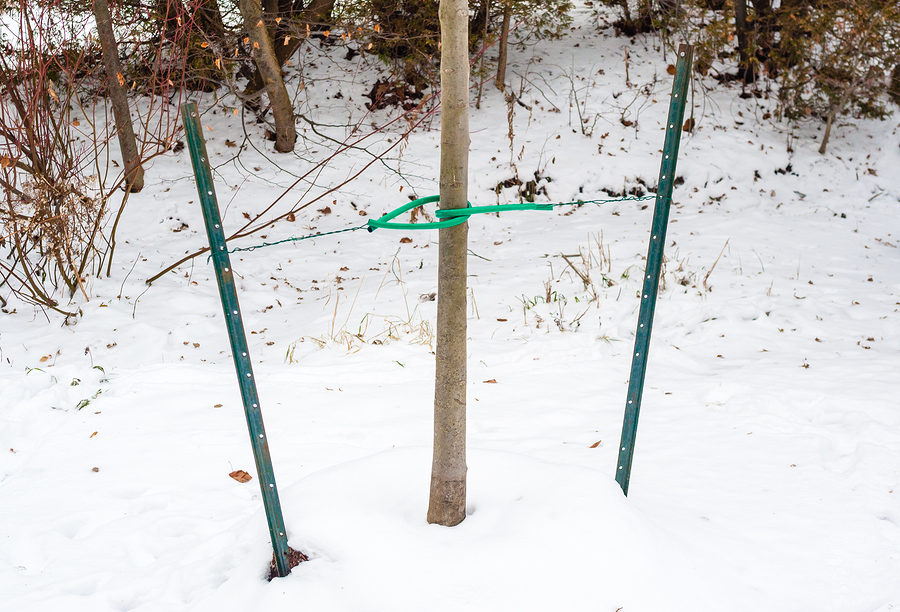
?? For all other trees in the future seasons, build a fence around them to cut off access from bucks. A 6-foot welded wire mesh barrier supported by an 8 foot rebar inserted into the ground in even intervals around the tree is a common practice.

Indianapolis Tree Service You Can Trust

Call Complete Tree Care at 317-783-2518 for experienced tree service in Indianapolis and throughout Central Indiana. We offer a wide range of residential and commercial tree services, including tree removal, tree trimming, stump grinding, stump removal, lot clearing, and more. If you want professional and efficient service you can trust, Complete Tree Care is the right call!

Indianapolis Tree Care 317-783-2518

Tree Species Than Can Worsen Seasonal Allergies

Many people suffer from seasonal allergies. From the watery eyes and itchy throat, to the sneezing, coughing, nasal congestion, sinus pressure, and that dreaded mental fog, no one wants to add on to their suffering when it comes to spring and summer allergies. One way you can prevent setting off your allergies is to limit your exposure to pollen.

Whether you are renovating your landscaping this year or planning an outdoor event, it will help you to learn which plants and trees are most likely to trigger seasonal allergies so that you can avoid them as much as possible. After all, a tree in your proximity exposes you to 10 times the amount of pollen as the tree down the street.

Here in Indiana, there are several species of trees that will worsen your seasonal allergies. Continue reading to learn some of the most common, and what to do if you have one that you want removed on your property.

Indianapolis Tree Service 317-783-2518

Tree Pollen

Deciduous trees produce very fine and powder-like pollen, and some species produce more tree pollen than others. These are the particular tree species you want to avoid if you suffer from allergies. Winds can carry tree pollen for miles and miles, and even just a little inhalation can set off or exacerbate allergic reactions. You may assume that the trees with big, colorful flowers are the ones that will get you, when in fact, these species tend to have stickier pollen that does not travel as well as other tree pollen.

According to WebMD.com, here are the list of trees found in Indiana that will trigger seasonal allergies and potentially worsen existing symptoms:

? Ash (Fraxinus Genus)
? Aspen (Populus Genus)
? Beech (Fagus Genus)
? Birch (Betula Genus)
? Box Elder (Acer Genus)
? Cedar (Thuja Genus)|
? Cottonwood (Populus Genus)
? Elm (Ulmus Genus)
? Hickory (Carya Genus)
? Mulberry (Morus Genus)
? Oak (Quercus Genus)
? Pecan (Carya Genus)
? Willow (Salix Genus)

Helpful Allergy Reminders:

✔ Pollen counts are usually higher on dry, warm, windy days.
✔ Get tested for allergies to see what causes your reactions.

Professional Tree Service in Indianapolis

Call Complete Tree Care at 317-783-2518 for prompt and professional Indianapolis tree service you can afford. We are experienced tree care technicians that can resolve your tree problems, regardless of your projects size or scope. We offer a wide range of tree removal and tree services, for both residential and commercial properties. We even offer free estimates and free tree care advice!

Indianapolis Tree Care 317-783-2518

Recommended Evergreen Trees That Grow Fast

It’s just about tree planting time, which means you need to start planning your landscaping renovations right now. Adding more trees to your property is a great way to improve energy efficiency, snow fencing, wind barriers, outdoor comfort, privacy, and more. Evergreen trees are the perfect choice of species here in Indiana since they remain fully covered in foliag all year long. If you want quick results with Evergreen tree growth, consider planting some species that tend to have faster growth rates.

Continue reading to learn which species of evergreen trees are recommended for fast growth and quality performance.

Indianapolis Tree Service 317-783-2518
Thuja Occidentalis – Also known as Northern White Cedar Eastern

✨ The USDA Hardiness Zones for Indiana: 5 through 6, specifically 5b, and 6a, and 6b.

Arborvitae

Some species of Arborvitae (Thuja occidentalis) can grow as much as 3 to 5 feet each year. If you are looking for fast growth and dense foliage, these versatile, pyramidal evergreens will do the job while also meeting the budget. They grow best in Hardiness zones 4 through 8, reaching an average of 15 feet tall and 4 feet wide. Suggested species of Arborvitae include

Japanese Cedar

Another fast-growing evergreen tree is the Japanese Cedar (Cryptomeria), which can achieve heights of 50 feet or more. They also have excellent tiered branch expansion and foliage density, which provides superior privacy, wind reduction, shade for energy efficiency, and snow fencing. They grow best in Hardiness zones 5 through 9, making Indiana the perfect region for these efficient trees.

Blue Arrow Juniper

If you are looking for an evergreen tree species that can grow tall and remain in quality condition with very little maintenance, a Blue Arrow Juniper (Juniperus scopulorum) is the right choice for your property. These low-maintenance, easy-to-care-for trees are excellent growers in zones 4 through 9, achieving heights of 20 feet on average, and widths up to 4 feet. They are resistant to pests and disease, and withstand cold and hot temperatures throughout the changing seasons.

Leyland Cypress

Depending on where you live in Indiana, the Leyland Cypress may or may not be the most confident choice. They grow best in in Hardiness zones 6 through 10, making Indiana just eligible for good growth. Be sure to check the USDA Hardiness Zone map to see of your region is a good match for Leyland Cypress trees. If it is, you are in luck, because these evergreens grow to 60 feet tall!

Are You in Need of Professional Tree Care?

Indianapolis Tree Care 317-783-2518

Call Complete Tree Care at 317-783-2518 for professional Indianapolis tree service you can trust. We serve all of Central Indiana with a wide range of skilled tree removal and tree care services, for both residential and commercial properties. Whether you need a single tree removed, or simply require routine tree service, like trimming or pruning, we can deliver prompt and professional service at a fair price. Request a free estimate, today.